Use this guide to organize a model-specific buying decision. Our research uses published equipment information, not physical testing.
Define the work before the machine
Buying a splitter begins with a wood inventory, not the largest tonnage badge in a search result. Record the typical length and diameter of your rounds, but also note the largest pieces you genuinely intend to process. A few awkward logs can change the handling problem even when most of the pile looks straightforward. Separate routine firewood from occasional oversized pieces and decide whether those exceptions justify a larger machine, outside help or a different preparation plan. This keeps one difficult round from dictating every purchase. Think about the full workflow: getting wood to the work area, positioning each round, removing the split pieces and moving them into storage. The machine only performs one part of that sequence. A quick advertised cycle does not tell you how long loading or cleanup will take. Describe your expected workload in practical terms such as the number of sessions and the access you have to the pile rather than assuming that a force claim measures productivity.
For the next decision, read our Gas vs Electric Log Splitters: The Practical Differences.
Compare complete equipment within a useful class
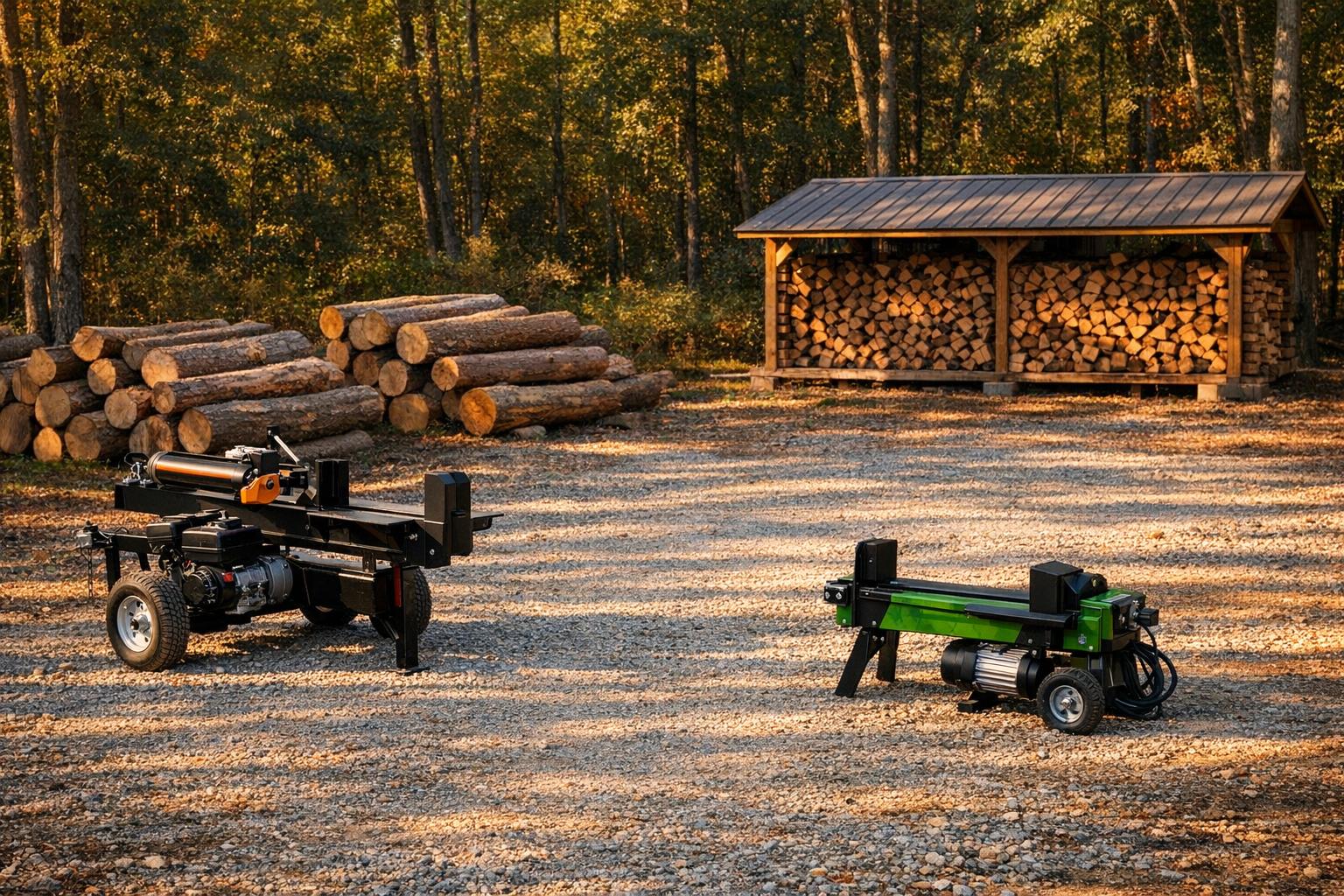
Electric hydraulic, gas hydraulic and kinetic machines answer different equipment questions. An electric hydraulic splitter needs a compatible supply and must be used within the manufacturer's location and cord restrictions. A gas engine introduces fuel, exhaust and engine maintenance, so its working location is an outdoor decision. Kinetic machines use a different drive mechanism and need their own control and operating checks. Do not combine these systems into one headline tonnage contest. Compare complete machines, not replacement cylinders or pumps whose titles also contain the words log splitter. A pump advertised for a thirty-ton system does not make the listing a thirty-ton machine. Likewise, a tractor attachment depends on equipment the buyer must already own and is not equivalent to a self-contained gas model. Our ranked comparisons separate documented drive types and tonnage bands. The catalog is broader, so its inclusion of an accessory or unusual machine should not be read as membership in a shortlist.
For the next decision, read our Log Splitter Tonnage: Read the Number in Context.
Read dimensions and handling details together
Maximum log length and maximum log diameter are separate limits. A long narrow round and a short wide round present different problems, and the machine bed may rule out a log before force becomes relevant. Look for both dimensions in the exact model manual rather than borrowing a number from a neighboring listing. Check whether the working orientation is horizontal only or can change to vertical. That affects positioning, but it does not remove the need to plan how heavy wood reaches the machine. Transport deserves the same attention. Wheels may support movement around a property without establishing suitability for towing on public roads. A hitch description is not a road approval. Before ordering, ask about delivered weight, unloading arrangements, packaging and assembly obligations. A machine that fits your budget but cannot be unloaded or moved to the woodpile is not a finished buying decision. Keep those logistics in a written checklist alongside the specifications.
For the next decision, read our Log Splitter Maintenance: Model-Specific Records.
Use evidence without turning it into a promise
Public customer reviews can identify a substantial ownership record, but a high average based on a handful of ratings is different from the same average across hundreds. Read the exact model identity and distinguish variant-specific equipment facts from shared customer feedback. Our editorial formula reduces the influence of very small review counts; it does not prove reliability or replace the manual. The Landworks listing cited below documents a complete twenty-ton gas machine, but that fact alone does not establish that it matches your work. Treat the listing as an equipment source and confirm current contents with the seller. Price and availability can change, so evaluate the current offer at the final destination rather than relying on an old screenshot. Finally, reserve time to read the manufacturer's safety instructions before the first session. The best shortlist is one you can explain in terms of your wood, supply, handling and storage constraints, not simply the machine with the biggest number.
Read the exact source before ordering
The source links below refer to specific equipment or guidance, not to hands-on testing by this site. Match the model and current configuration before using a listed fact. Review counts and averages are captured observations for an exact Amazon identifier; they can change and may reflect a variation family on the merchant page. Prices and stock are displayed only while the collected offer remains within its freshness window. Neither a customer average nor our editorial rating establishes suitability for your own work area. Keep unanswered compatibility, supply, service and delivery questions open until the manufacturer or seller provides a clear, written, model-specific answer. Record the source and its date so that later listing changes do not silently replace the configuration you actually researched.