Use this guide to organize a model-specific buying decision. Our research uses published equipment information, not physical testing.
Tonnage is a claim about force, not every part of the job
A tonnage figure gives a starting point for comparing machine listings, but it is not a complete buying rule. The number does not tell you how long a log can be, how heavy a round you can position, how a machine is controlled or how quickly a full work session proceeds. Those are separate questions. The thirty-ton BILT HARD listing cited below also describes an engine, beam configuration and transport equipment. Each detail belongs to that exact listing and should be confirmed in its manual. Do not read a force label as independent laboratory verification by this site. We record manufacturer wording; we have not measured the force of these machines. The same caution applies when one seller uses a different way of describing a product. A larger headline can justify closer investigation without automatically establishing a better machine for your particular pile of wood.
For the next decision, read our Horizontal vs Vertical Log Splitters: Handling First.
Describe wood beyond a single diameter
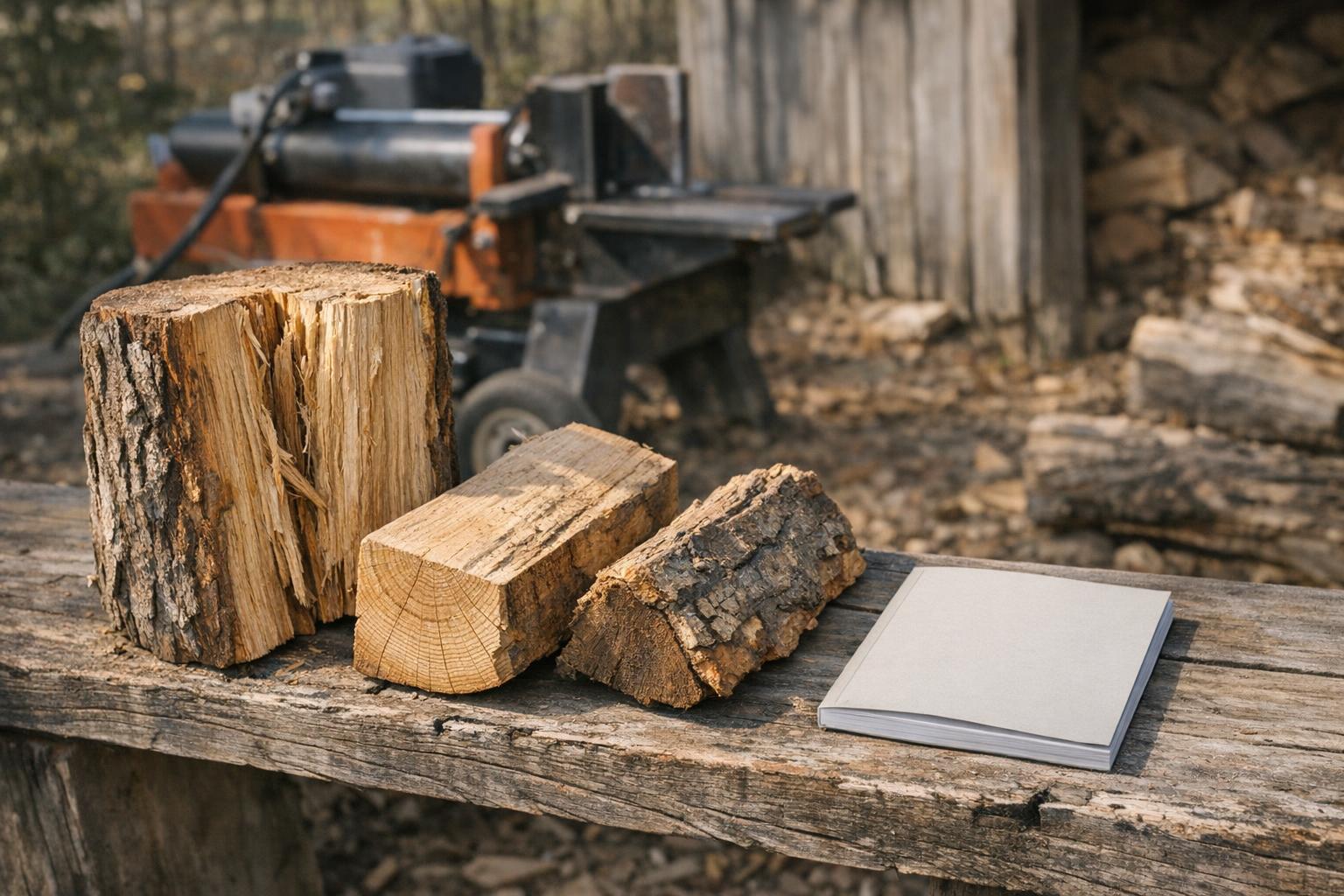
Measure representative rounds and record their length as well as diameter. A machine with a suitable force claim may still have a bed that is too short for the pieces you intend to process. Also note whether your pile consists mainly of straight-grained sections or includes knots and irregular growth. A simple calculator cannot see those differences. Species and condition are relevant to planning, but broad labels such as hardwood and softwood contain considerable variation. Do not mistake a category flag for a measured property of your logs. The same applies to green and seasoned wood: the label alone is not a precise moisture reading or a universal predictor of splitting behavior. Our planner deliberately describes its outputs as illustrative research bands. It is designed to show that different inputs can lead to different shortlists, not to certify that a given force will successfully split every round within a diameter range.
For the next decision, read our Log Splitter Safety: Use the Exact Model Manual.
Read the planner assumptions before using its answer
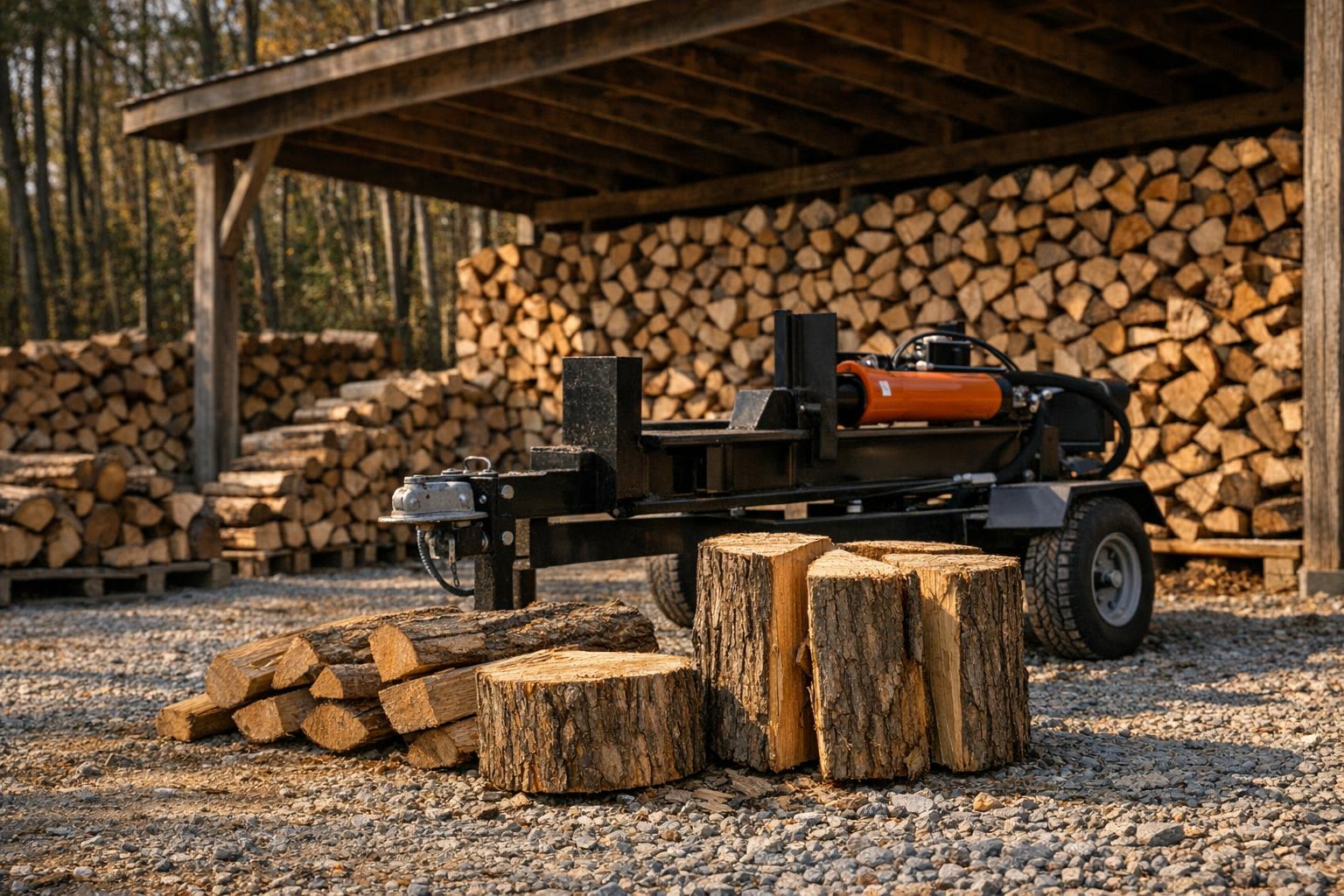
The on-site planner uses explicit editorial base bands: five tons for diameters up to eight inches, twelve up to twelve inches, twenty up to eighteen inches and thirty above that. It adds five for the hardwood flag and five for the green-wood flag, with a cap of forty. These are transparent illustrative assumptions, not a manufacturer sizing table or an engineering equation. Their purpose is to organize questions for further research. If the result conflicts with the exact machine manual, the manual's limits take precedence. If a round is outside the documented dimensions, a favorable planner number does not make it suitable. The tool also says nothing about electrical installation, towing legality, operator technique or machine maintenance. Use it alongside a written list of your actual wood dimensions and handling constraints. Repeating the calculation with a larger representative round can help expose how much your exceptional pieces affect the shortlist.
For the next decision, read our Choosing a Log Splitter: Start With Your Wood.
Compare within bands and retain uncertainty
We divide reviewed hydraulic comparisons into five-to-seven-ton electric machines, twenty-to-thirty-ton gas machines and thirty-three-to-forty-ton gas machines. These are explicit catalog-supported groupings, not universal boundaries between homeowner and professional use. A machine may be outside those ranges and still remain visible in the catalog. Within a band, our evidence formula combines captured reviews and documented attributes rather than awarding the top position to the largest tonnage automatically. That prevents the category label from becoming the entire recommendation. Before purchasing, check the current exact model, supplied equipment, bed limits, operating orientation and service requirements. If two products remain difficult to separate, record that uncertainty instead of inventing a performance difference from their photographs. A useful decision can be based on compatibility and logistics even when independent force measurements are unavailable. The goal is to choose a documented machine whose limitations you understand, not to pretend that one headline number predicts every future log.
Read the exact source before ordering
The source links below refer to specific equipment or guidance, not to hands-on testing by this site. Match the model and current configuration before using a listed fact. Review counts and averages are captured observations for an exact Amazon identifier; they can change and may reflect a variation family on the merchant page. Prices and stock are displayed only while the collected offer remains within its freshness window. Neither a customer average nor our editorial rating establishes suitability for your own work area. Keep unanswered compatibility, supply, service and delivery questions open until the manufacturer or seller provides a clear, written, model-specific answer. Record the source and its date so that later listing changes do not silently replace the configuration you actually researched.