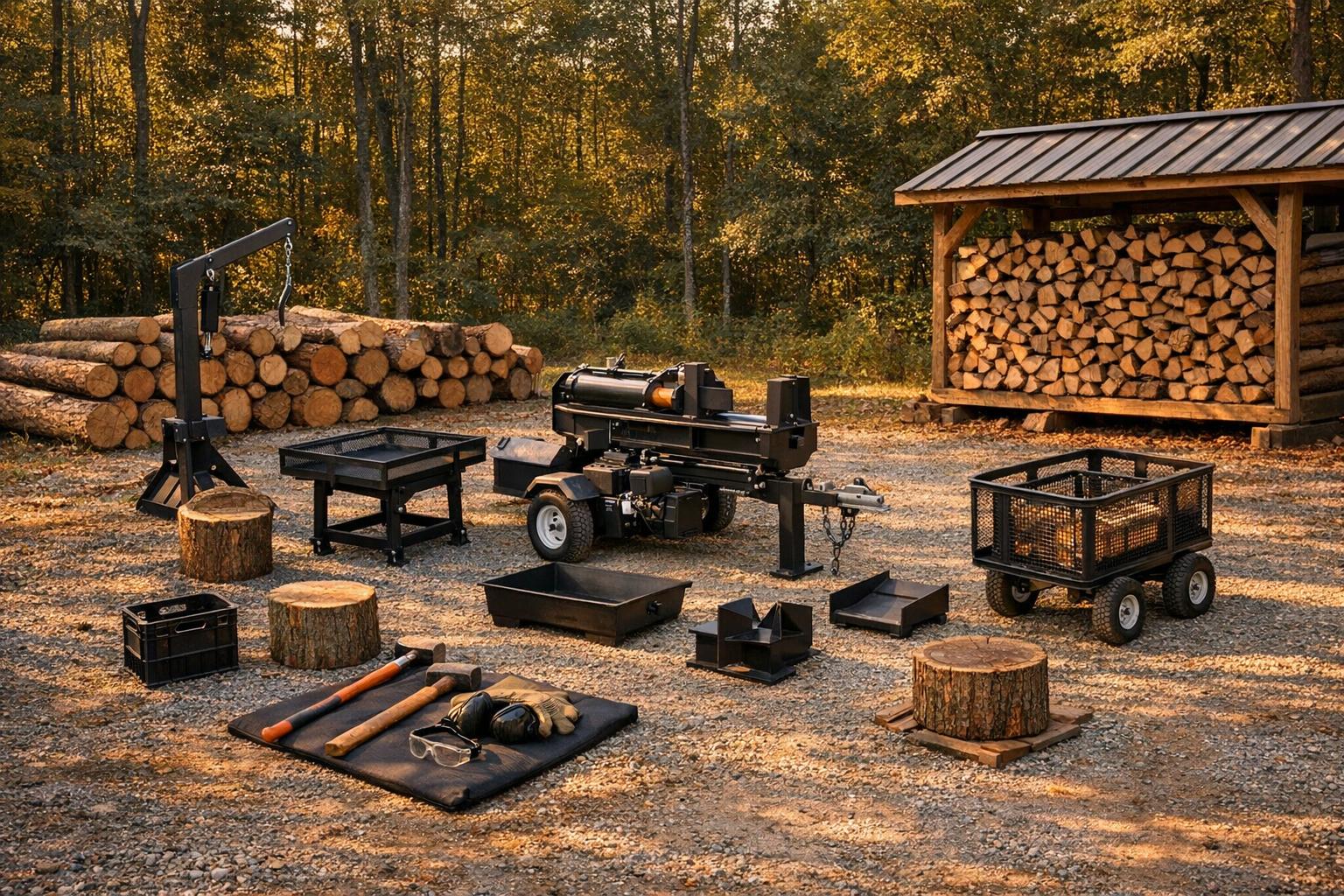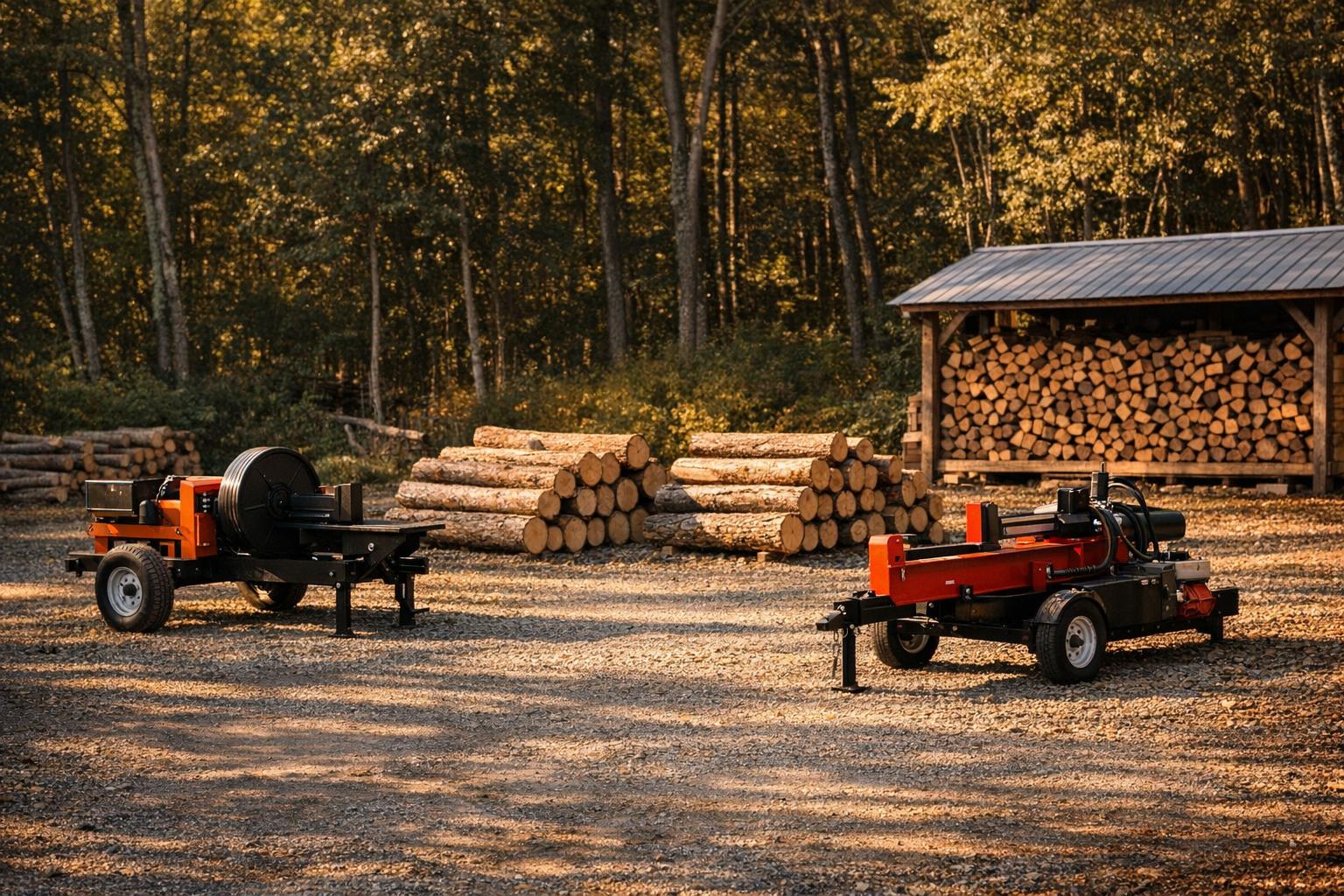
Use this guide to organize a model-specific buying decision. Our research uses published equipment information, not physical testing.
Towable is not a complete transport approval
The word towable tells you that a seller describes a towing arrangement, but it does not establish that every road, speed or vehicle is permitted. A hitch, tires and axle must be assessed together with the exact machine manual and local requirements. Do not infer public-road legality from a product title alone. The BILT HARD twenty-seven-ton source below names a ball coupler and DOT tires. Those are exact-listing claims, not a legal conclusion from this website. Before planning a journey, confirm the manufacturer's transport restrictions, the towing vehicle's requirements and any rules that apply where the equipment will travel. If a seller cannot provide the relevant documentation, treat transport as unresolved. A machine that can be repositioned on private property is not automatically ready for a road trip. Keeping those two use cases separate prevents a convenient catalog label from becoming an unsupported operational assumption.
For the next decision, read our Log Splitter Safety: Use the Exact Model Manual.
Plan delivery before planning routine movement
Transport begins with the first delivery. Ask how the machine arrives, whether unloading equipment is needed and what the delivery service actually includes. A listed assembled weight is not necessarily the shipping weight, and a curbside drop is not the same service as placement in a work area. Confirm the packaging and assembly obligations in writing. Then inspect the route from the delivery point to storage and the intended operating location. Narrow access, soft ground or an awkward turn can become more important than the machine's headline specifications. Do not improvise lifting or securing methods from a comparison article. Follow the manufacturer and transport provider's requirements, and use qualified help where needed. If you plan to collect the machine yourself, establish the exact dimensions and weight of the transported configuration first. A photograph is not a reliable measurement, and assumptions based on a different model can leave you with equipment that does not fit the planned vehicle.
For the next decision, read our Log Splitter Accessories: Compatibility Before Convenience.
Distinguish machine movement from wood movement
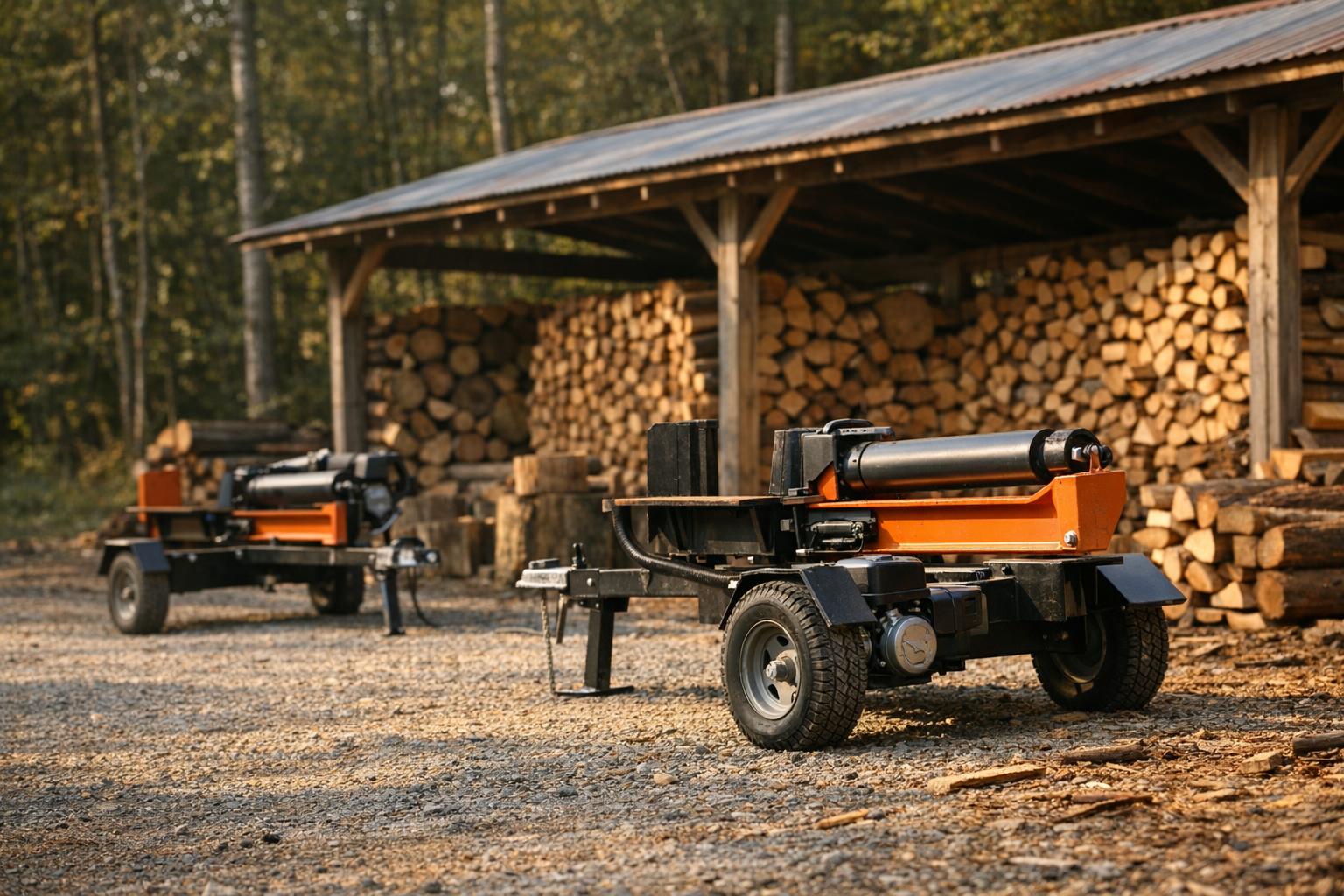
Moving the splitter closer to a pile may reduce one part of the handling work, but it does not eliminate the need for a suitable operating area. The final location must satisfy the manual's requirements for space, footing and safe operation. A convenient parking spot is not automatically a suitable work site. Think about where unsplit rounds wait and where finished pieces are placed. The route for other people or vehicles should not depend on crossing an active work zone. After the session, consider the storage plan, not just the journey out. The machine may need cleaning, inspection or other manufacturer-prescribed preparation before storage. These tasks should be read from the exact manual, not inferred from the presence of a cover in an accessory listing. A transport plan is strongest when it includes delivery, movement, working location and return storage as separate decisions.
For the next decision, read our Kinetic vs Hydraulic Log Splitters: What Changes.
Record the facts that can change the purchase
Build a model-specific checklist containing documented dimensions, delivered weight, coupler details, stated transport restrictions and the seller's unloading terms. Mark missing values as questions rather than filling them from a visually similar machine. Keep commercial availability separate: an item being in stock does not establish that it can be delivered to your address under the service you expect. Read the final offer and delivery terms before committing. Customer reviews may describe owners' experiences, but an anecdote about towing is not a substitute for manufacturer instructions or local law. Our comparison score does not include a road-legality judgment and should never be read as one. If transport remains uncertain, compare a different model or obtain a professional delivery solution before buying. A slightly different machine that can be moved and stored correctly may be a better practical choice than a higher-rated listing with unresolved logistics. The useful result is a documented transport plan, not confidence borrowed from the word towable.
Read the exact source before ordering
The source links below refer to specific equipment or guidance, not to hands-on testing by this site. Match the model and current configuration before using a listed fact. Review counts and averages are captured observations for an exact Amazon identifier; they can change and may reflect a variation family on the merchant page. Prices and stock are displayed only while the collected offer remains within its freshness window. Neither a customer average nor our editorial rating establishes suitability for your own work area. Keep unanswered compatibility, supply, service and delivery questions open until the manufacturer or seller provides a clear, written, model-specific answer. Record the source and its date so that later listing changes do not silently replace the configuration you actually researched.