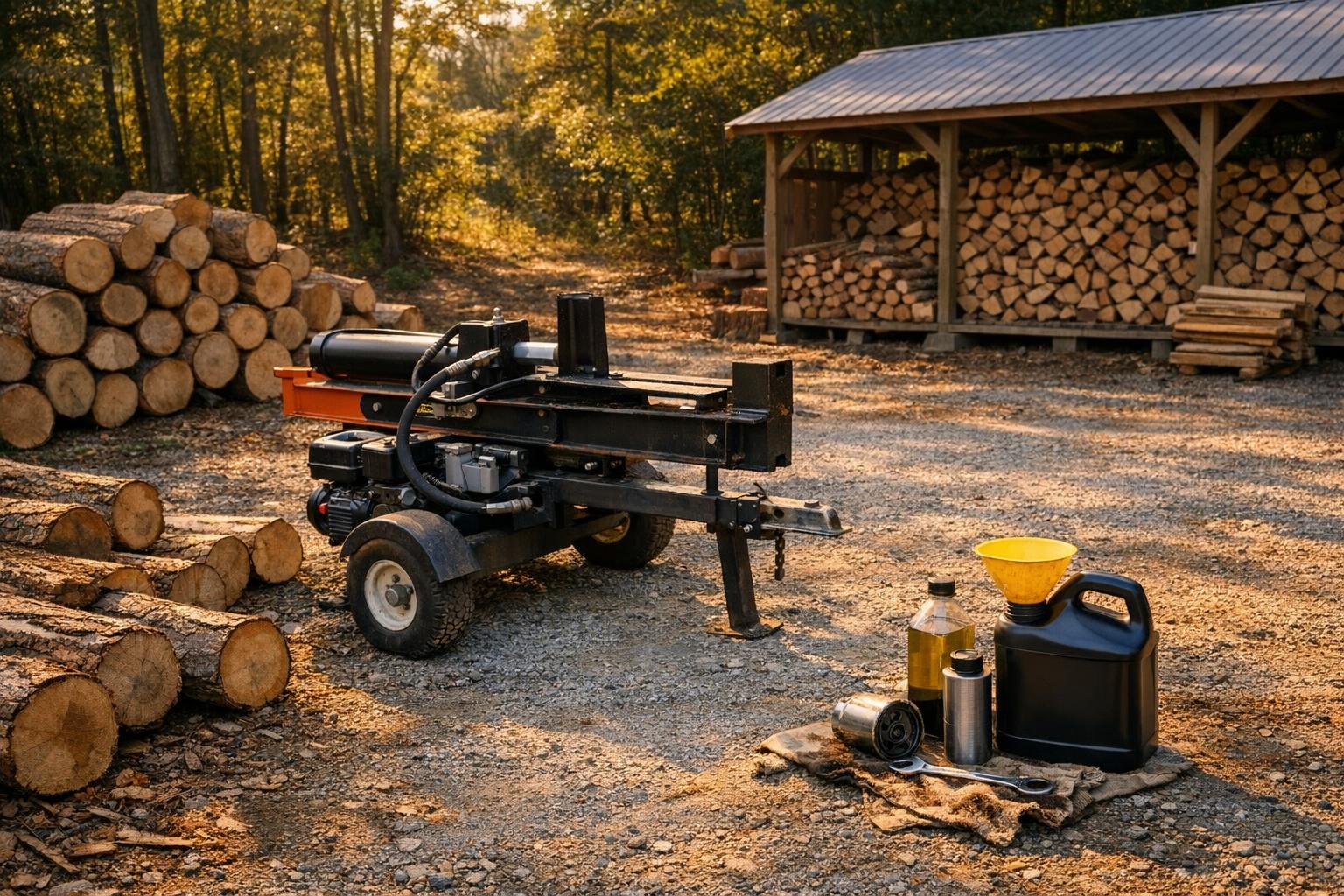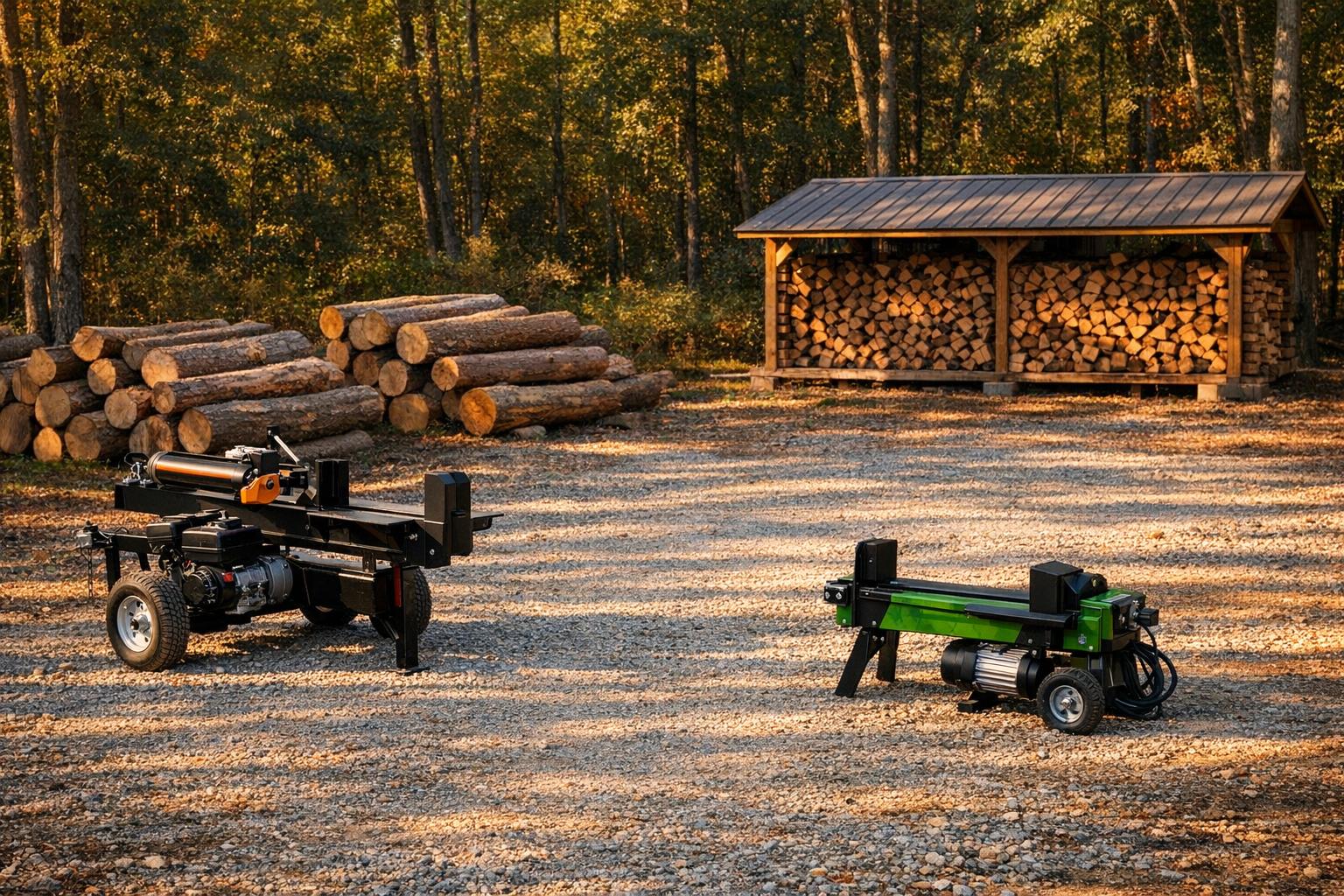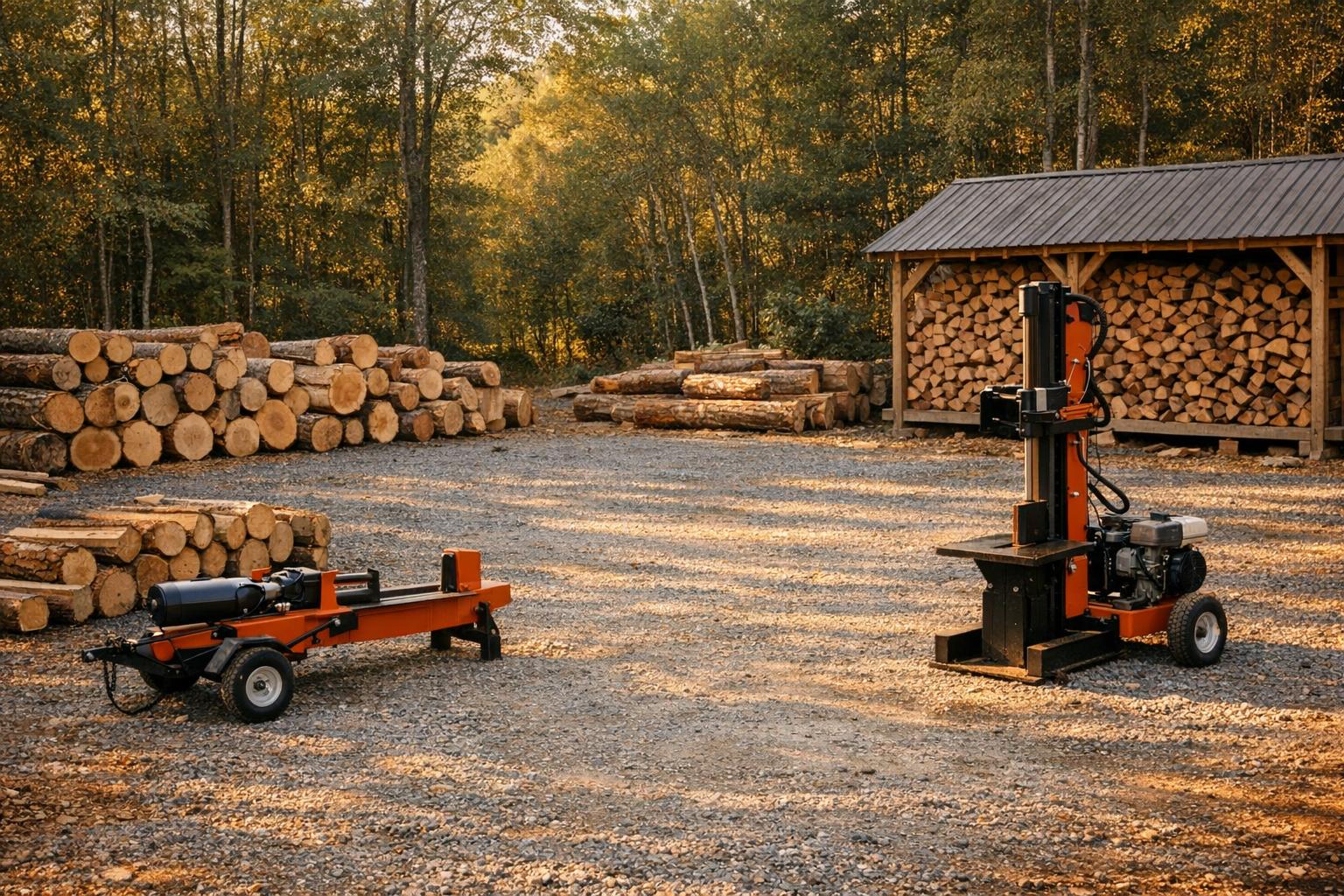
Use this guide to organize a model-specific buying decision. Our research uses published equipment information, not physical testing.
Working orientation changes the handling question
Horizontal and vertical describe how a machine is arranged for splitting, not two universal levels of quality. The practical choice depends on the wood you handle and the manufacturer's permitted operating positions. A horizontal machine often requires bringing the round to its working height. A machine with a documented vertical mode may offer a different positioning arrangement, but it still requires moving the wood to a suitable place. Do not turn that distinction into a promise that heavy handling disappears. The Champion listing cited below explicitly names horizontal and vertical operation for its forty-ton model. That wording supports an equipment feature on that exact machine. It does not establish the orientation of every Champion model or every similar beam. Confirm the conversion and operating requirements in the model manual rather than learning them from a generic comparison photograph or an unrelated video.
For the next decision, read our Towable Log Splitters: Check More Than the Hitch.
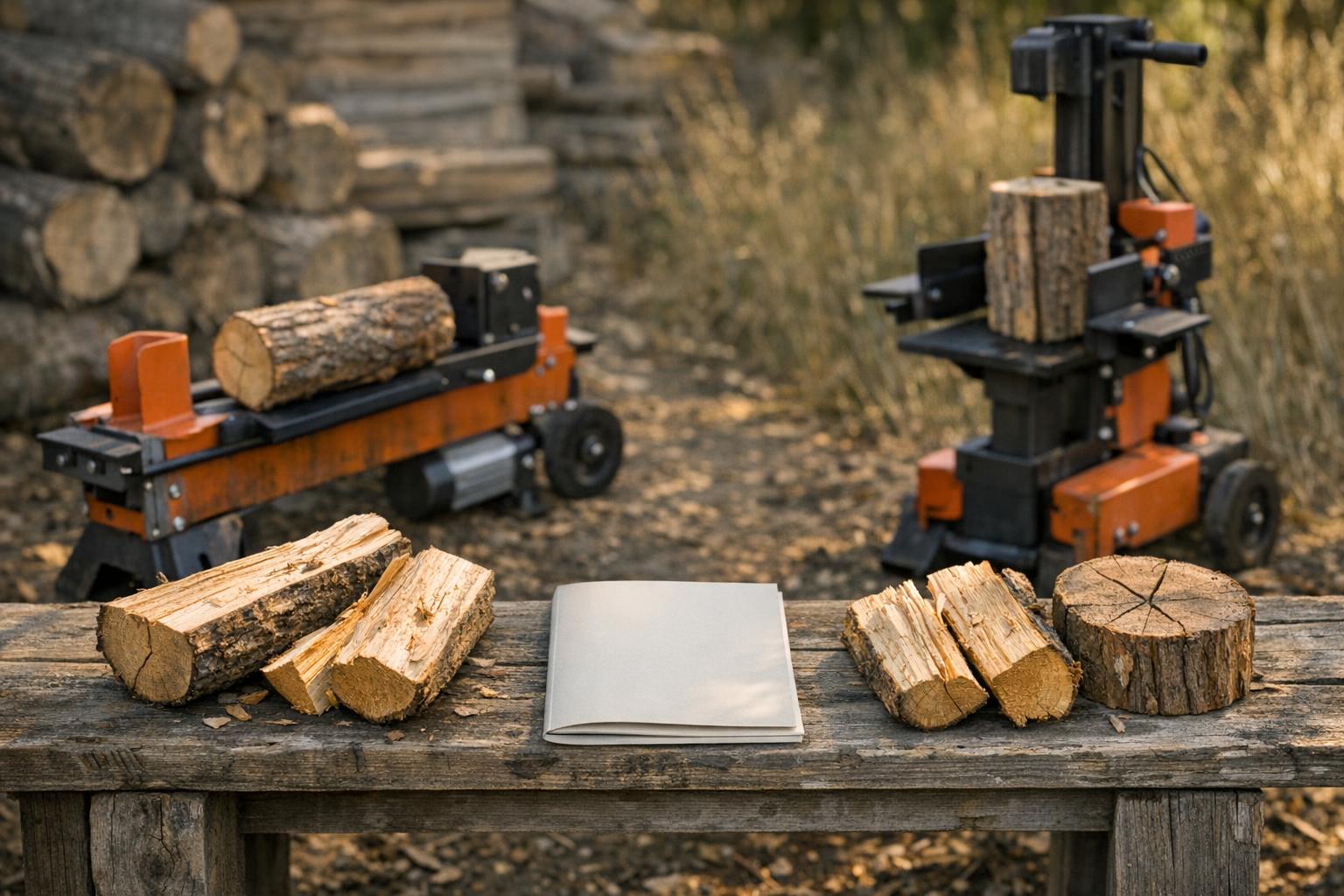
Map the path of the heaviest round
Start with the whole route: where the rounds are stored, how they reach the machine and where split pieces go afterward. A configuration that looks convenient in a product picture may be awkward on your actual ground or within a crowded work area. Consider access, footing, obstructions and the room required by the manual. Avoid planning a work zone that forces people to cross the operating area repeatedly. Delivered machine weight and the way it moves around the property matter too. A towable frame and a small wheeled electric machine solve different movement problems. Neither should be assessed only by the appearance of its tires. Check the manufacturer's movement restrictions and ask about unloading before delivery. If you cannot explain how the machine and wood reach the intended location, the orientation decision is premature. Resolve the logistics before treating an equipment feature as a complete solution.
For the next decision, read our Log Splitter Maintenance: Model-Specific Records.
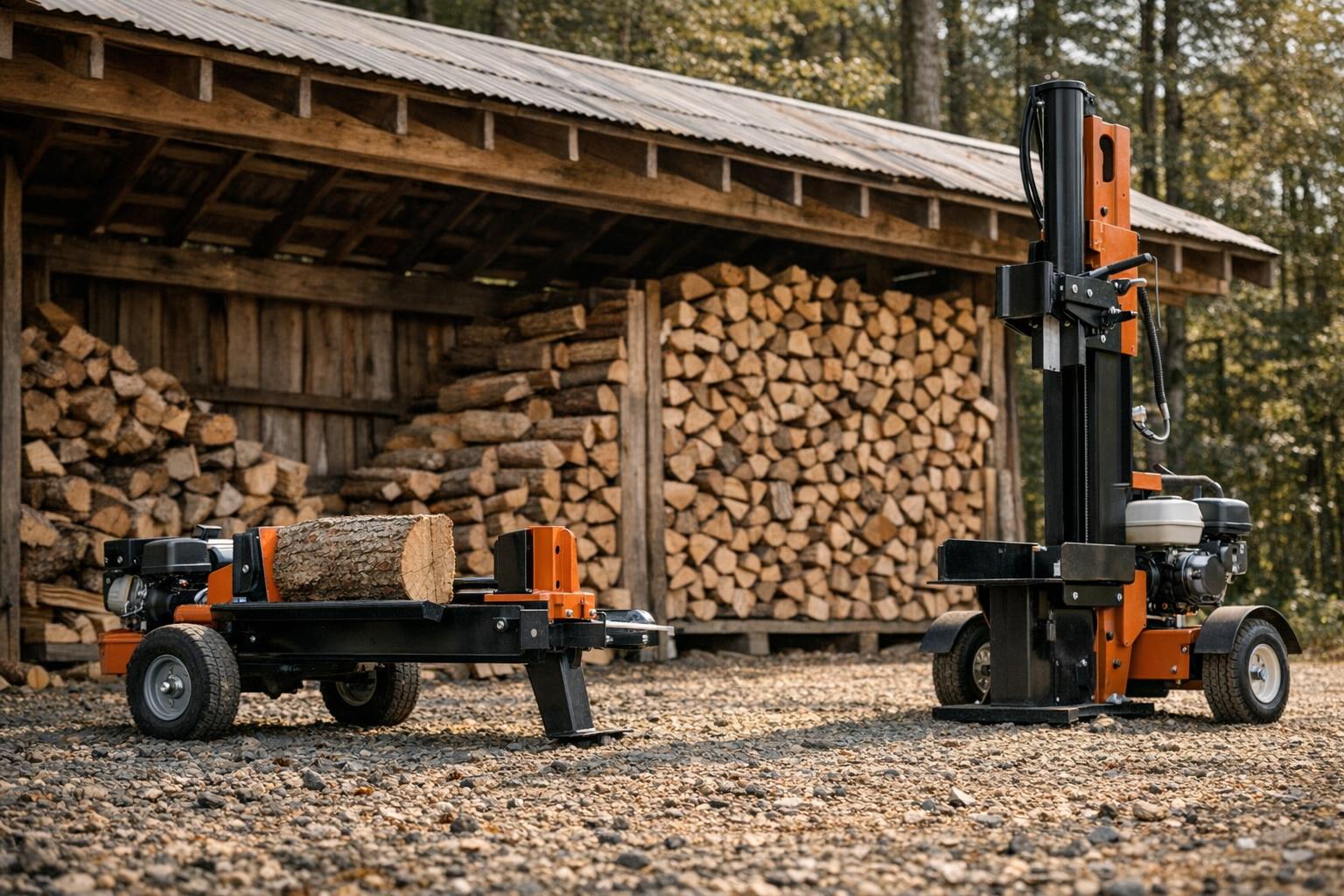
Check supports and accessories against the exact model
Log cradles, tables and stands may help organize a particular machine's working arrangement, but inclusion varies by offer. A product photo can show an optional accessory without establishing that it is in the box. Read the included-items list and retain the exact model number of any separate attachment you intend to buy. Do not assume that matching tonnage implies matching mounting points or approved use. Likewise, a frame that looks similar to another brand is not compatibility evidence. If the manufacturer does not document an accessory for the model, ask before purchasing. The same caution applies to replacement parts and wedges. Changes around a splitting mechanism can affect the intended controls and clearances, so this guide does not provide fabrication or modification instructions. Keep the question narrow: is this specific part approved for this specific machine, and does the manual describe how it should be used? An unclear answer belongs on the unresolved list.
For the next decision, read our Gas vs Electric Log Splitters: The Practical Differences.
Avoid ranking a feature outside its context
A vertical mode is useful information, but our review-based ratings do not certify that every buyer needs it. Someone handling small, uniform rounds may value a different arrangement from someone regularly moving much larger pieces. Your handling constraints can therefore outweigh a small difference in editorial score. We document orientation when the exact source says it, and we leave the field absent when it is not established. Missing documentation is not proof that a machine lacks a feature; it means we cannot responsibly publish that feature from the evidence available. Before ordering, confirm the manual, the current configuration and any assembly obligations with the seller. Read all control and shutdown instructions before operation, and involve qualified service personnel where the manufacturer requires them. A good horizontal-versus-vertical choice is a model-specific handling plan with clear limits. It is not a shortcut around the work-area, maintenance and safety requirements that apply to both arrangements.
Read the exact source before ordering
The source links below refer to specific equipment or guidance, not to hands-on testing by this site. Match the model and current configuration before using a listed fact. Review counts and averages are captured observations for an exact Amazon identifier; they can change and may reflect a variation family on the merchant page. Prices and stock are displayed only while the collected offer remains within its freshness window. Neither a customer average nor our editorial rating establishes suitability for your own work area. Keep unanswered compatibility, supply, service and delivery questions open until the manufacturer or seller provides a clear, written, model-specific answer. Record the source and its date so that later listing changes do not silently replace the configuration you actually researched.