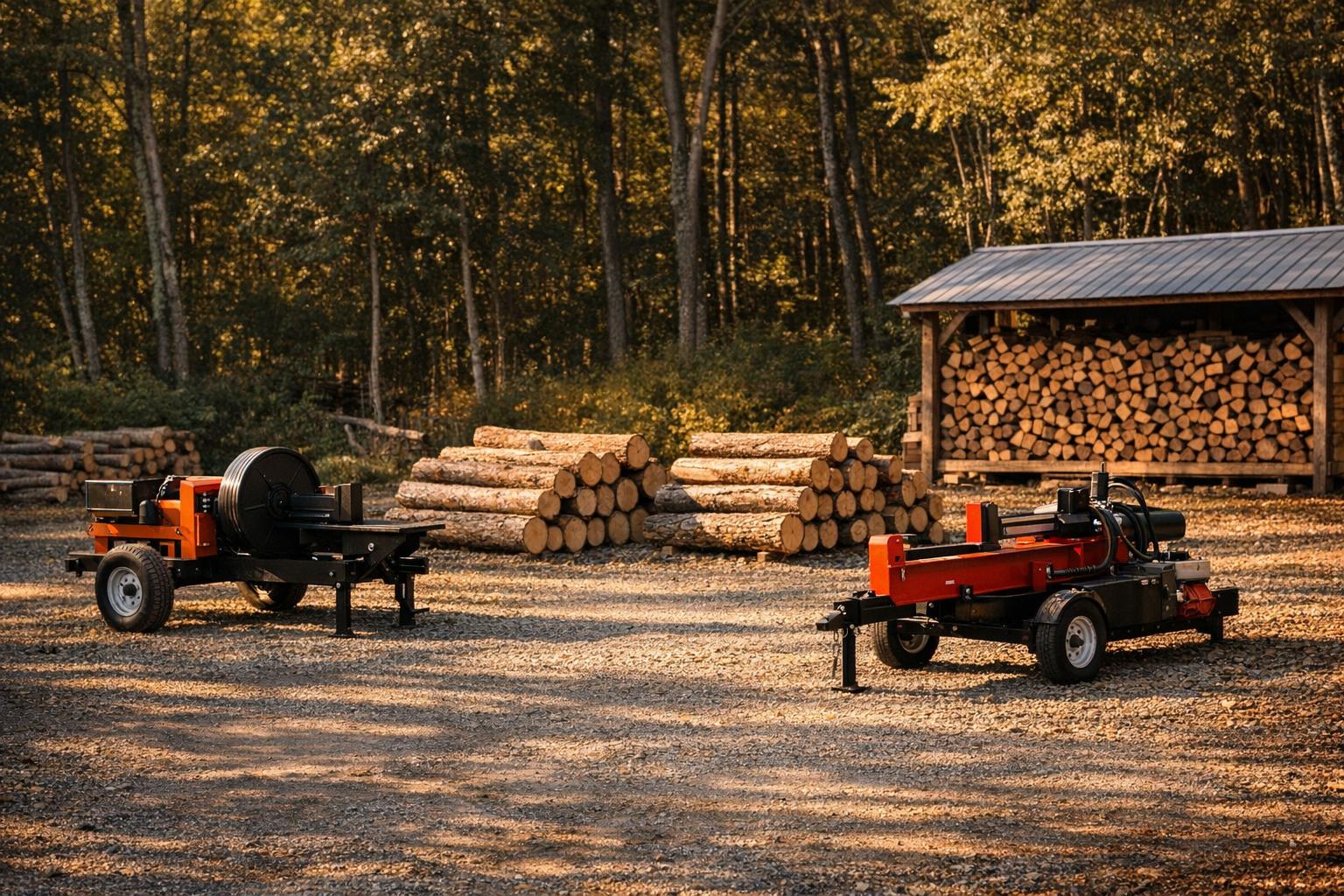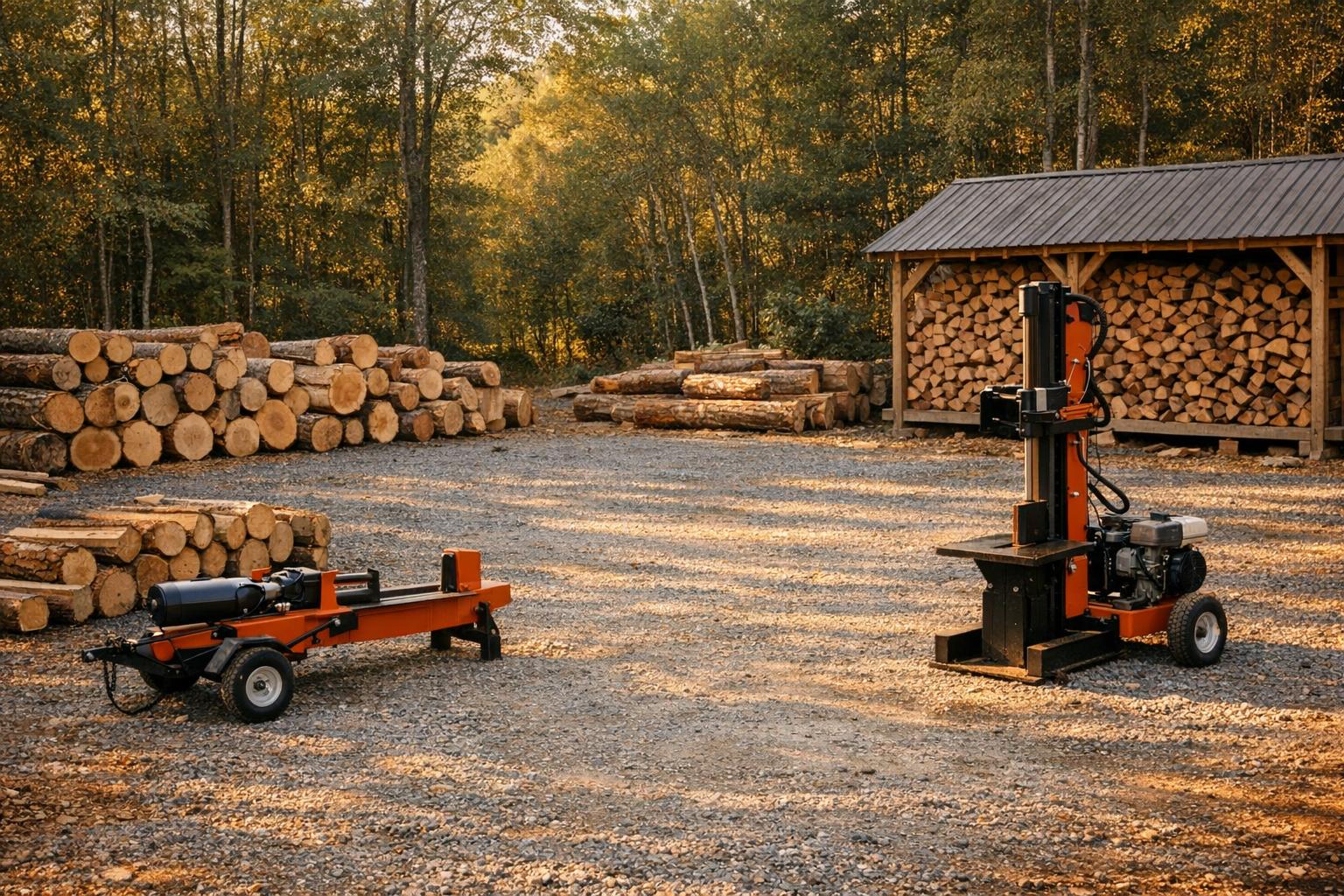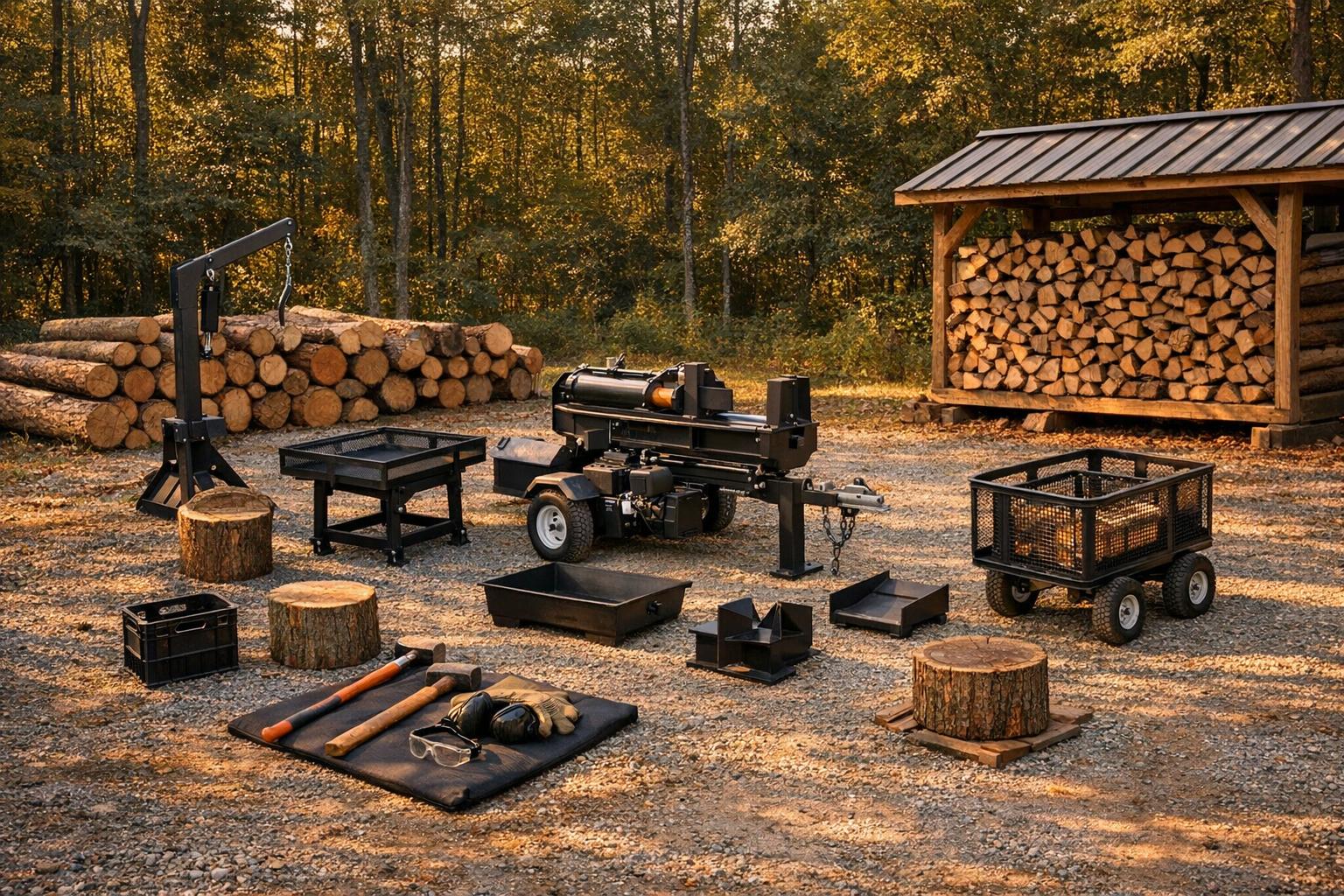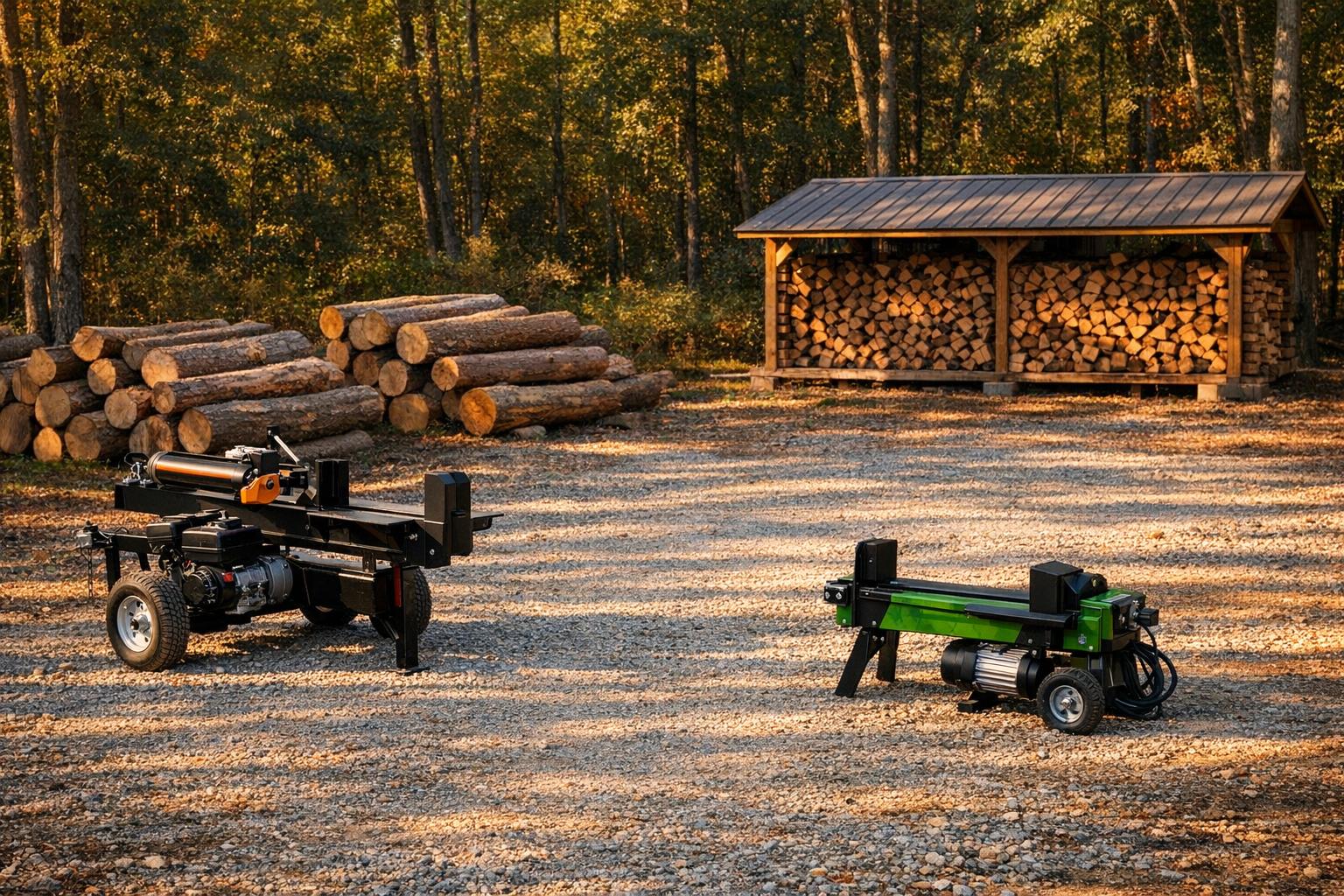
Use this guide to organize a model-specific buying decision. Our research uses published equipment information, not physical testing.
Start with the power source you can actually use
The useful comparison between gas and electric splitters starts at the work area. An electric hydraulic machine depends on a suitable electrical supply and on the manufacturer's instructions for connections, cord limits and protection from weather. A gas machine brings its own engine but also exhaust, fuel and engine upkeep. Neither arrangement is automatically more convenient for every property. Draw the route from your stored wood to the intended operating area and consider where split pieces will go afterward. If the woodpile is far from a suitable outlet, that is a real constraint rather than an invitation to improvise an extension arrangement. If the proposed gas working area is inside a garage or other enclosure, choose a different location: combustion equipment belongs outdoors according to its manual. This guide compares equipment decisions, not installation methods. A qualified electrician should resolve supply questions that go beyond an existing compatible setup.
For the next decision, read our Kinetic vs Hydraulic Log Splitters: What Changes.
Separate motor language from engine language
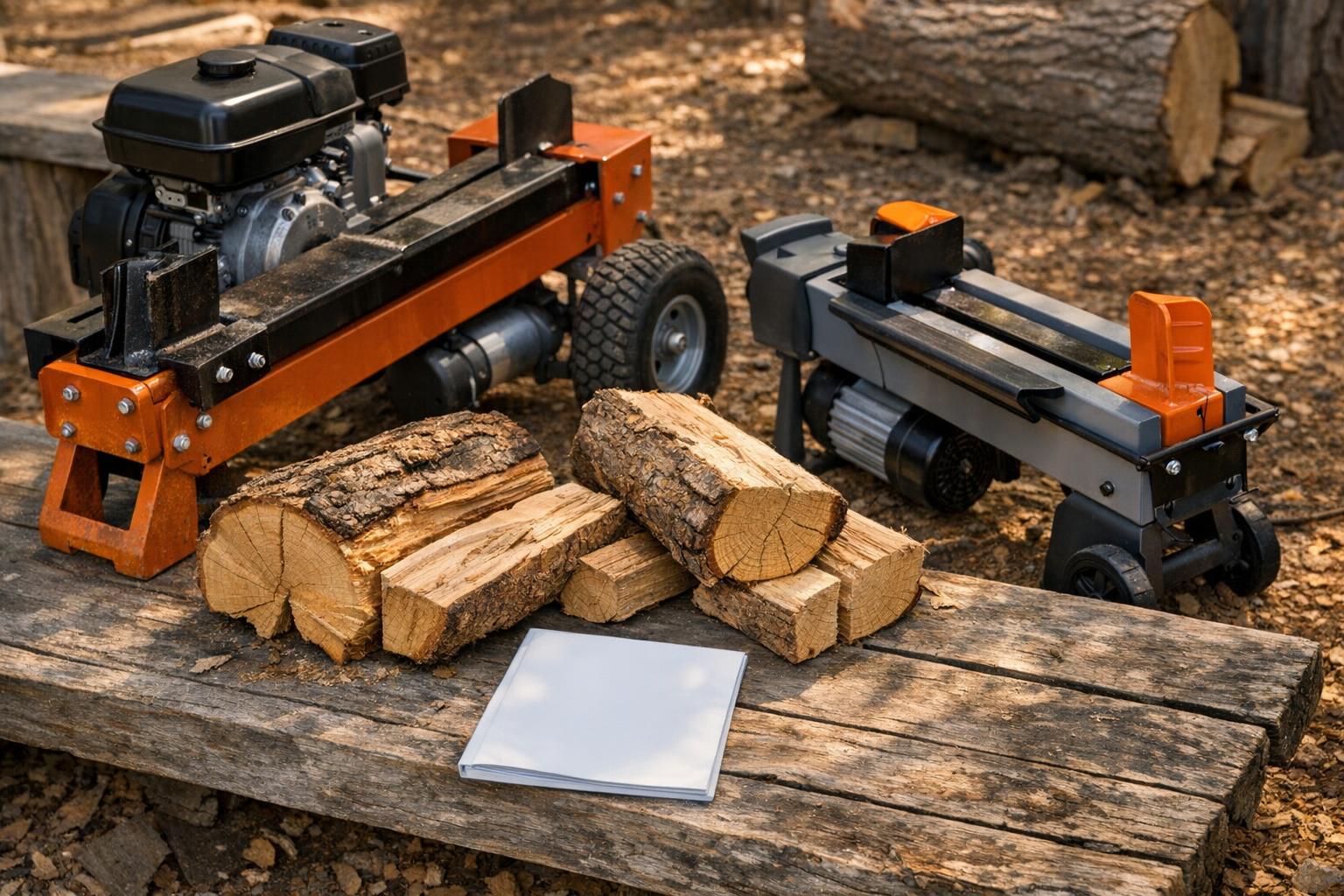
Electric motor ratings may be expressed in horsepower. That word does not mean a machine burns gasoline. Read the exact title, supply information and manufacturer documentation before classifying a listing. Conversely, an electric-start gas engine remains a combustion engine; the starting method is not the source of splitting power. Catalog search results often blur these distinctions. Our electric comparison specifically covers complete electric hydraulic machines with stated ratings from five to seven tons. It excludes flywheel machines even when their motors also plug into an outlet. The gas comparisons cover different force bands and are not presented as interchangeable alternatives at the same size. The YARDMAX YS0650 source below names a six-and-a-half-ton electric model. Use that exact model identity when checking documentation, accessories and reviews. Another product from the same brand may have different controls, bed length or operating requirements, so brand familiarity is not enough.
For the next decision, read our Horizontal vs Vertical Log Splitters: Handling First.
Compare the whole session, not one specification
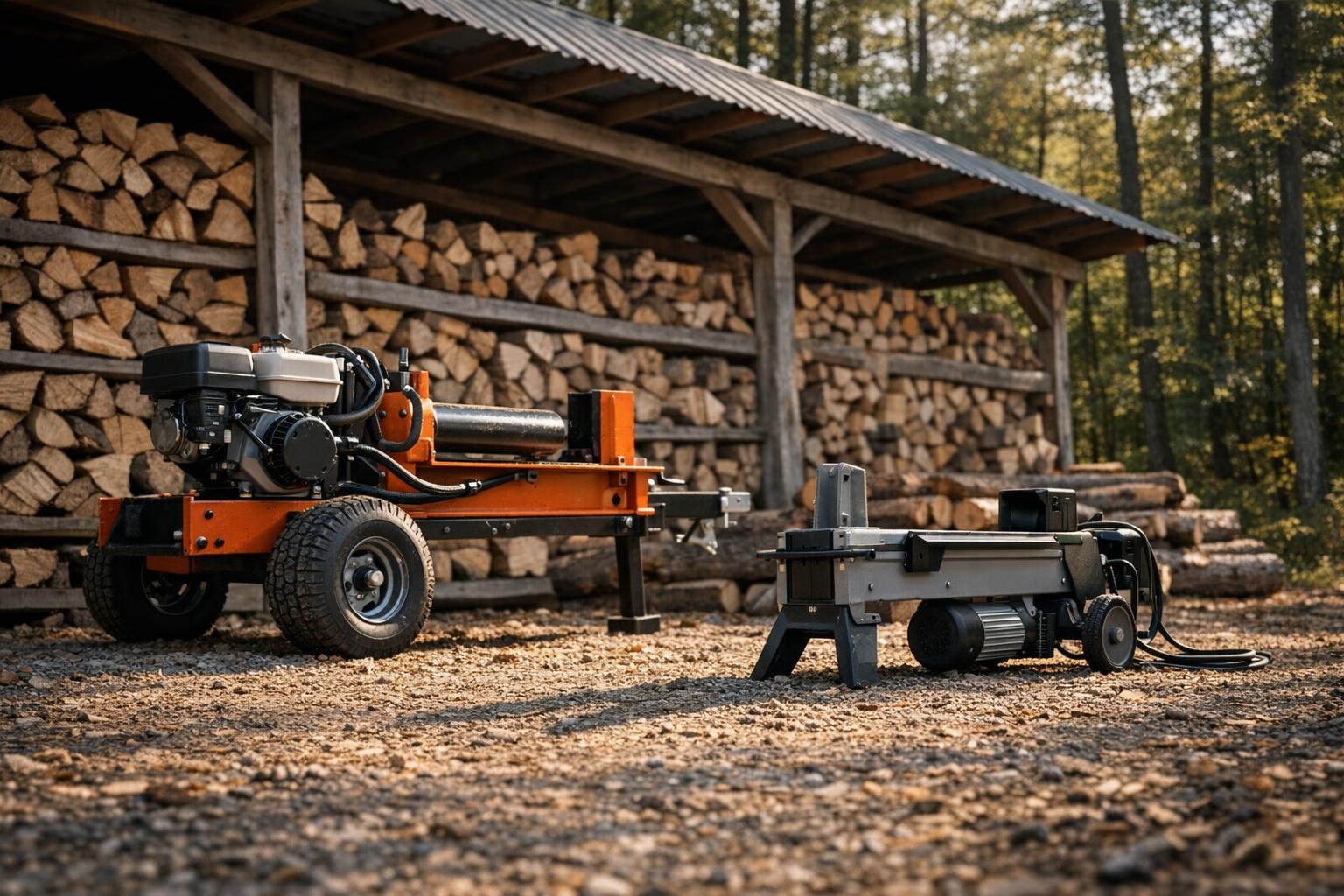
Tonnage is only one part of a splitting session. You still position wood, operate the prescribed controls, clear split pieces and handle the next round. A listed cycle time usually describes a mechanism under stated conditions rather than an entire operator workflow. Avoid converting it directly into a promised number of logs per hour. Consider how the machine is supported, whether you must lift every round and whether a supplied stand changes the working arrangement. Check exactly what is included because optional stands or trays may appear in marketing photographs without being part of the offer. Storage is another practical difference. Measure the assembled machine and the route into its storage location rather than judging portability from a small product photo. A handle and wheels can help with movement, but they do not make every surface or slope suitable. Read the movement and storage instructions before assuming you can roll a machine across the whole property.
For the next decision, read our Log Splitter Accessories: Compatibility Before Convenience.
Make the purchase conditional on documentation
Write two short lists: the constraints you already know and the facts still missing. Known constraints might include the usual log length, available storage floor and the location of the woodpile. Missing facts might include the exact electrical requirement, supplied accessories or delivered packaging. Ask the seller or manufacturer to close the second list before paying. Review evidence helps compare documented listings but does not solve an incompatible supply or handling problem. Our displayed editorial scores blend captured average ratings, review volume and documented attributes; they are not measured cutting results or guarantees of service life. The formula also does not account for your personal operating costs, because those depend on local prices and use. Compare those separately using your own assumptions and label them as estimates. An honest gas-versus-electric decision may end with either system, or with postponing the purchase until a suitable work area exists. That is more useful than choosing a machine first and attempting to adapt the property afterward.
Read the exact source before ordering
The source links below refer to specific equipment or guidance, not to hands-on testing by this site. Match the model and current configuration before using a listed fact. Review counts and averages are captured observations for an exact Amazon identifier; they can change and may reflect a variation family on the merchant page. Prices and stock are displayed only while the collected offer remains within its freshness window. Neither a customer average nor our editorial rating establishes suitability for your own work area. Keep unanswered compatibility, supply, service and delivery questions open until the manufacturer or seller provides a clear, written, model-specific answer. Record the source and its date so that later listing changes do not silently replace the configuration you actually researched.