Use this guide to organize a model-specific buying decision. Our research uses published equipment information, not physical testing.
Understand the drive mechanism before comparing claims
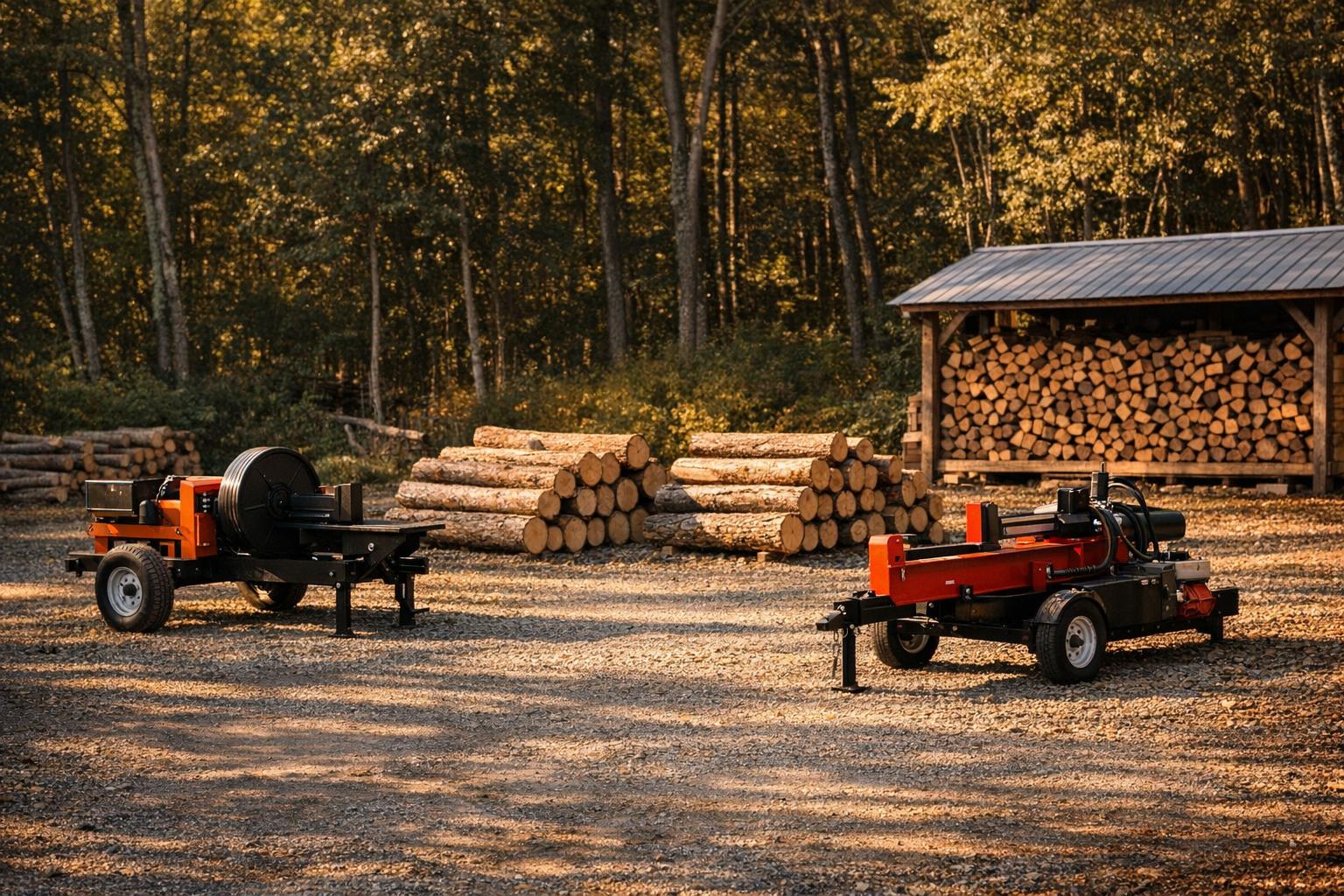
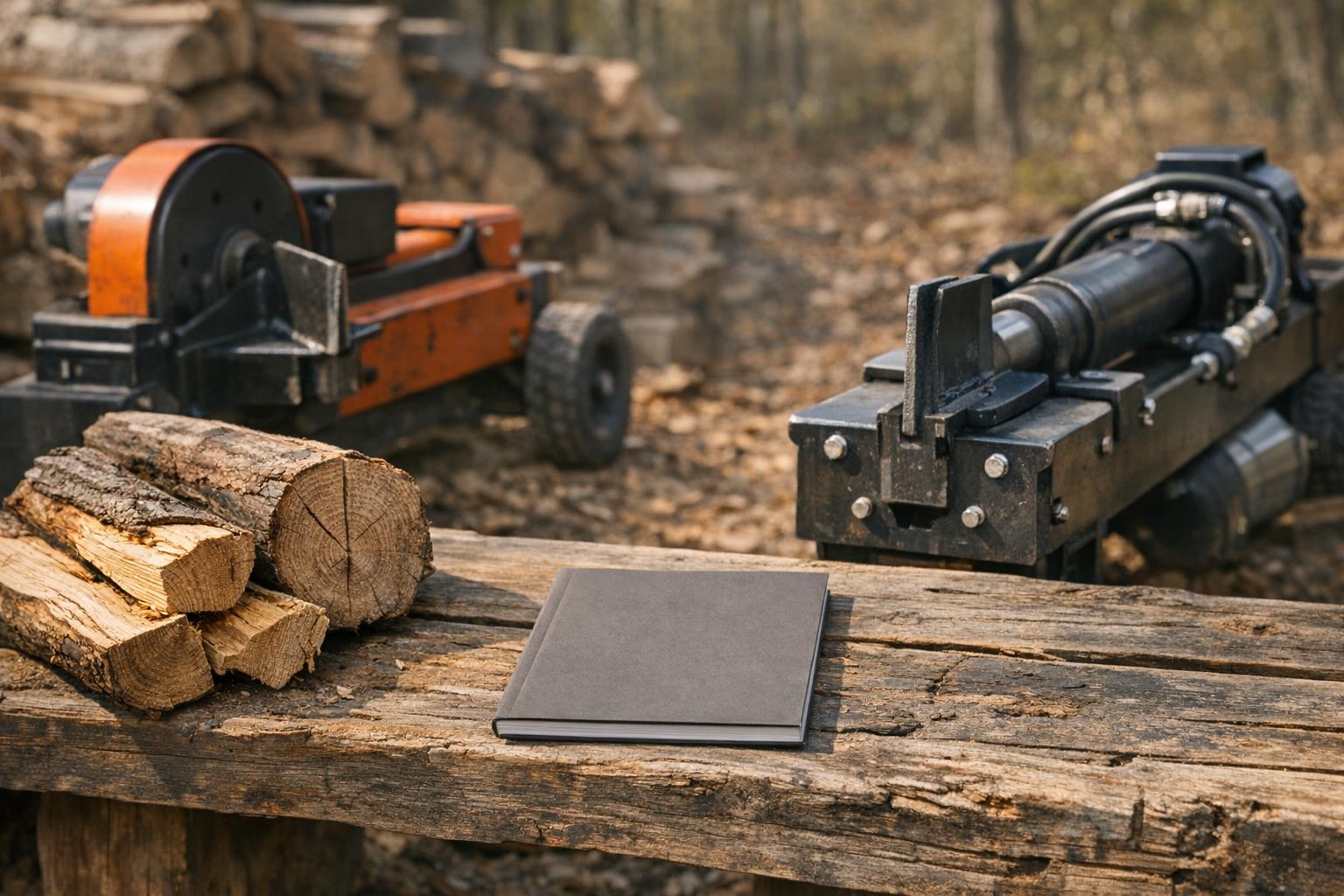
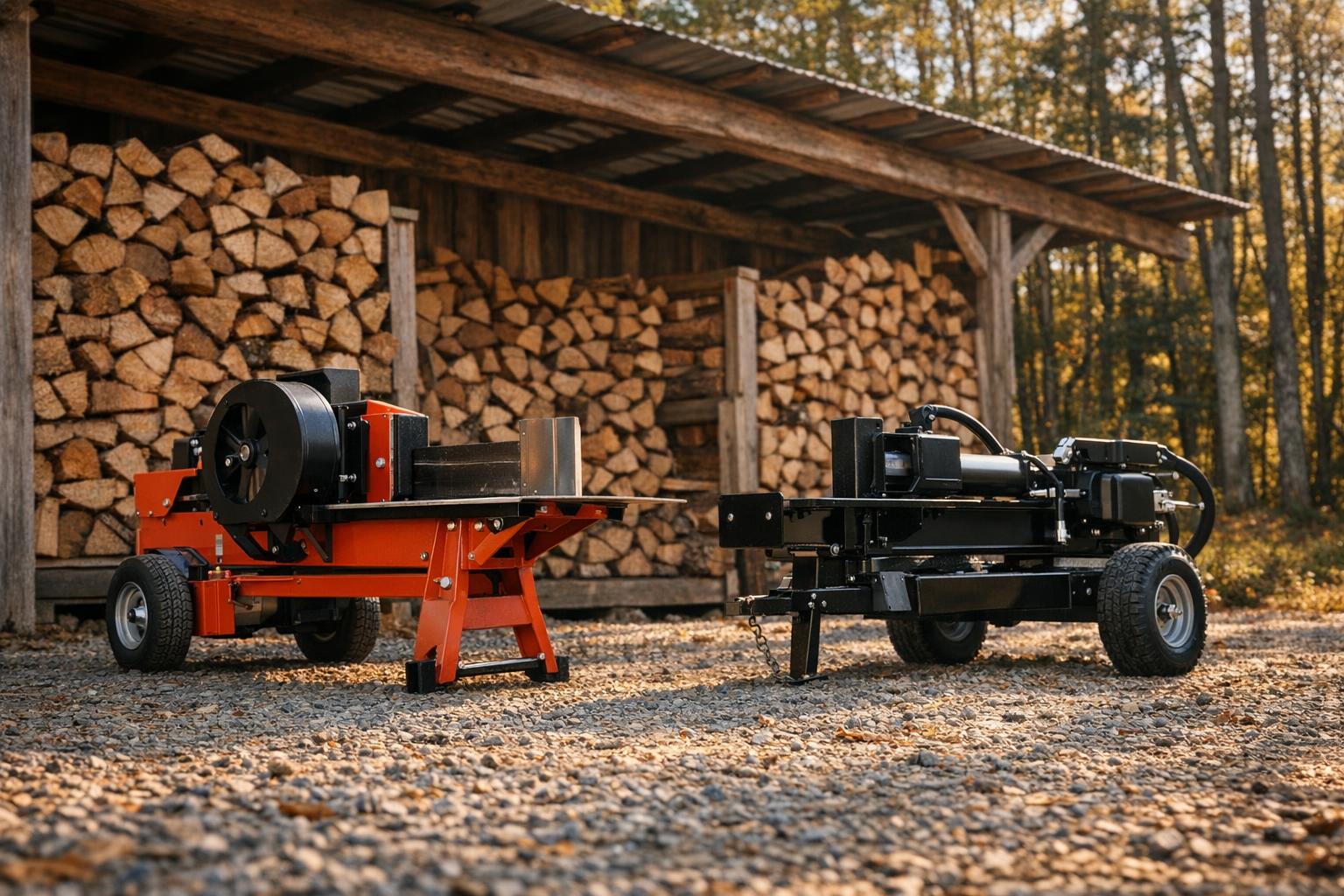
Kinetic and hydraulic describe the mechanism, not necessarily the energy source. A kinetic machine uses a flywheel system, while a hydraulic splitter uses hydraulic force to move its splitting mechanism. Either label needs to be read alongside the exact product's motor or engine information. An electric kinetic machine should not be silently grouped with electric hydraulic models just because both connect to electricity. This distinction matters when you read cycle-time claims and operating instructions. The FORESTWEST source below explicitly describes a ten-ton kinetic machine with a double-flywheel arrangement. That supports the classification of that exact listing; it does not establish that every machine with a similar frame uses the same parts or controls. Before comparing performance language, identify the actual model and download its manual. A generic picture of a wood splitter cannot tell you how its mechanism is engaged or what the manufacturer's operating sequence requires.
For the next decision, read our Log Splitter Tonnage: Read the Number in Context.
Treat cycle time as a bounded claim
A short advertised cycle time can sound like a direct productivity measure, but a complete session includes much more than the powered stroke. Wood must reach the machine, be positioned within the specified limits, be split under the prescribed control sequence and then be cleared. None of that disappears when a mechanism returns quickly. Ask what the quoted time measures and whether the manufacturer states conditions for the claim. Do not turn a seconds-per-cycle headline into an hourly output guarantee. Log shape also matters to the work even when it is not captured in a simple specification. Knots, irregular grain and awkward round geometry change handling and can change the way a session proceeds. The useful question is whether the whole workflow suits your wood and working arrangement, not whether one machine displays the smallest number. Our catalog records a cycle time only when the exact listing states it and labels the number as a manufacturer claim.
For the next decision, read our Towable Log Splitters: Check More Than the Hitch.
Keep control and maintenance information model-specific
Different drive systems come with different maintenance and control requirements. That is a reason to read the manual, not a reason to improvise one system's procedures on another. Do not apply a hydraulic troubleshooting tip to a flywheel mechanism or assume that a familiar control shape behaves identically across brands. Check the manufacturer's requirements for inspection, shutdown, storage and service. When a task calls for trained service personnel, use that route rather than treating a product comparison as a repair guide. Accessories also need exact compatibility. A wedge, stand or support advertised for one machine is not a universal upgrade simply because another model has the same tonnage badge. Modified geometry can change the intended operating arrangement. Before buying a nonstandard attachment, ask the manufacturer whether it is approved for the exact model. If documentation is absent or contradictory, leave the item out of your plan until the uncertainty is resolved.
For the next decision, read our Seasoning Firewood After Splitting: Plan the Storage.
Why kinetic remains a guide and catalog category here
Our current captured kinetic review pool is too thin to support the same five-machine evidence-backed ranking used for the hydraulic comparisons. We therefore retain kinetic equipment in the catalog and explain the buying questions here instead of inventing a larger reviewed shortlist. A listing with one or two captured ratings may be a real product, but its average is not a substantial ownership record. This limitation is about the evidence we have collected, not a claim that kinetic machines are inherently worse or that an uncollected model has no customers. Readers interested in this mechanism should compare exact manuals, current offers, supported log limits and available service before deciding. Keep unknown facts visible in your notes. If a seller answers a question, retain the model-specific response rather than generalizing it to the whole brand. A well-documented hydraulic alternative may be easier to assess today, while a kinetic model may still deserve investigation. The distinction is between a research lead and a fully supported ranked recommendation.
Read the exact source before ordering
The source links below refer to specific equipment or guidance, not to hands-on testing by this site. Match the model and current configuration before using a listed fact. Review counts and averages are captured observations for an exact Amazon identifier; they can change and may reflect a variation family on the merchant page. Prices and stock are displayed only while the collected offer remains within its freshness window. Neither a customer average nor our editorial rating establishes suitability for your own work area. Keep unanswered compatibility, supply, service and delivery questions open until the manufacturer or seller provides a clear, written, model-specific answer. Record the source and its date so that later listing changes do not silently replace the configuration you actually researched.