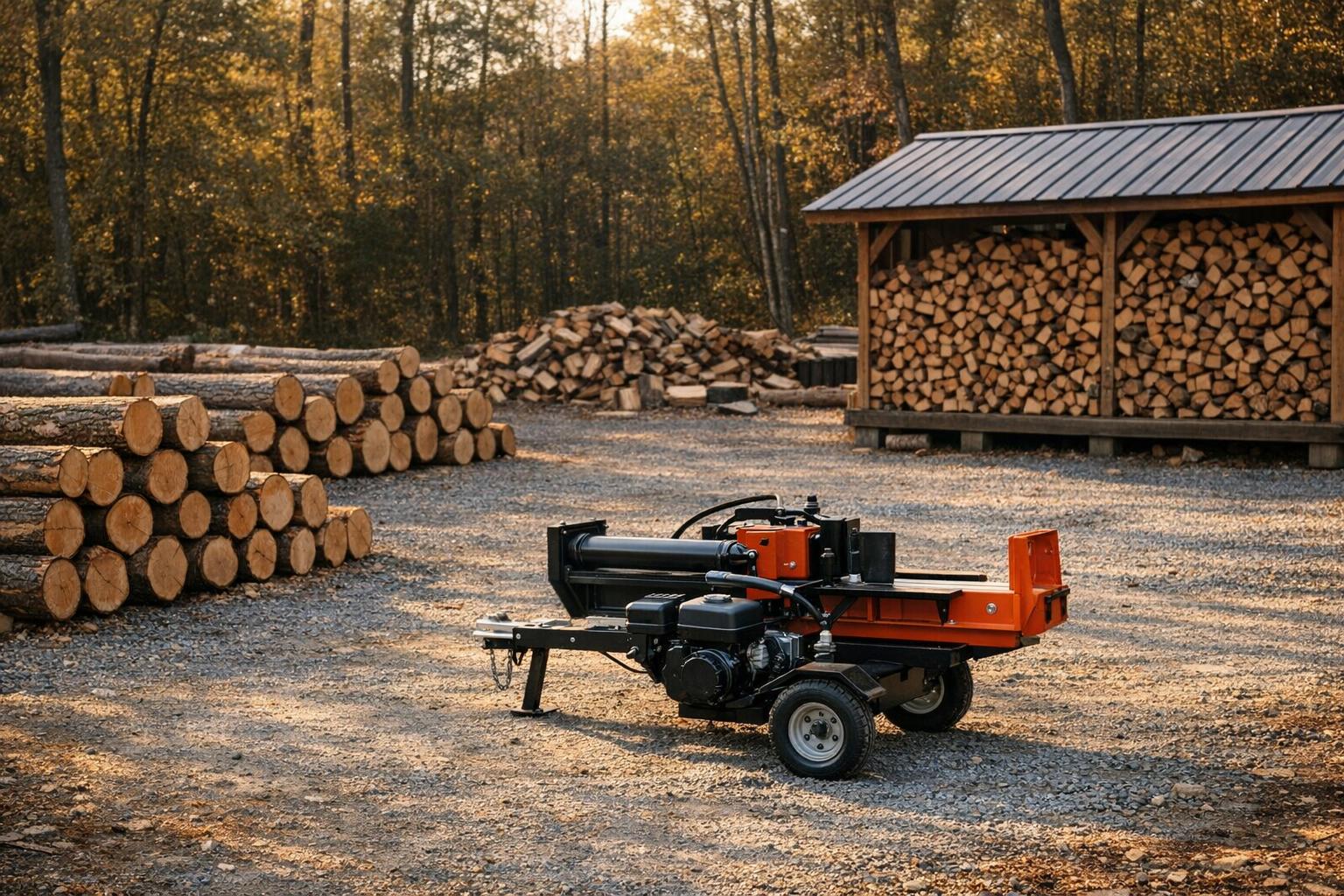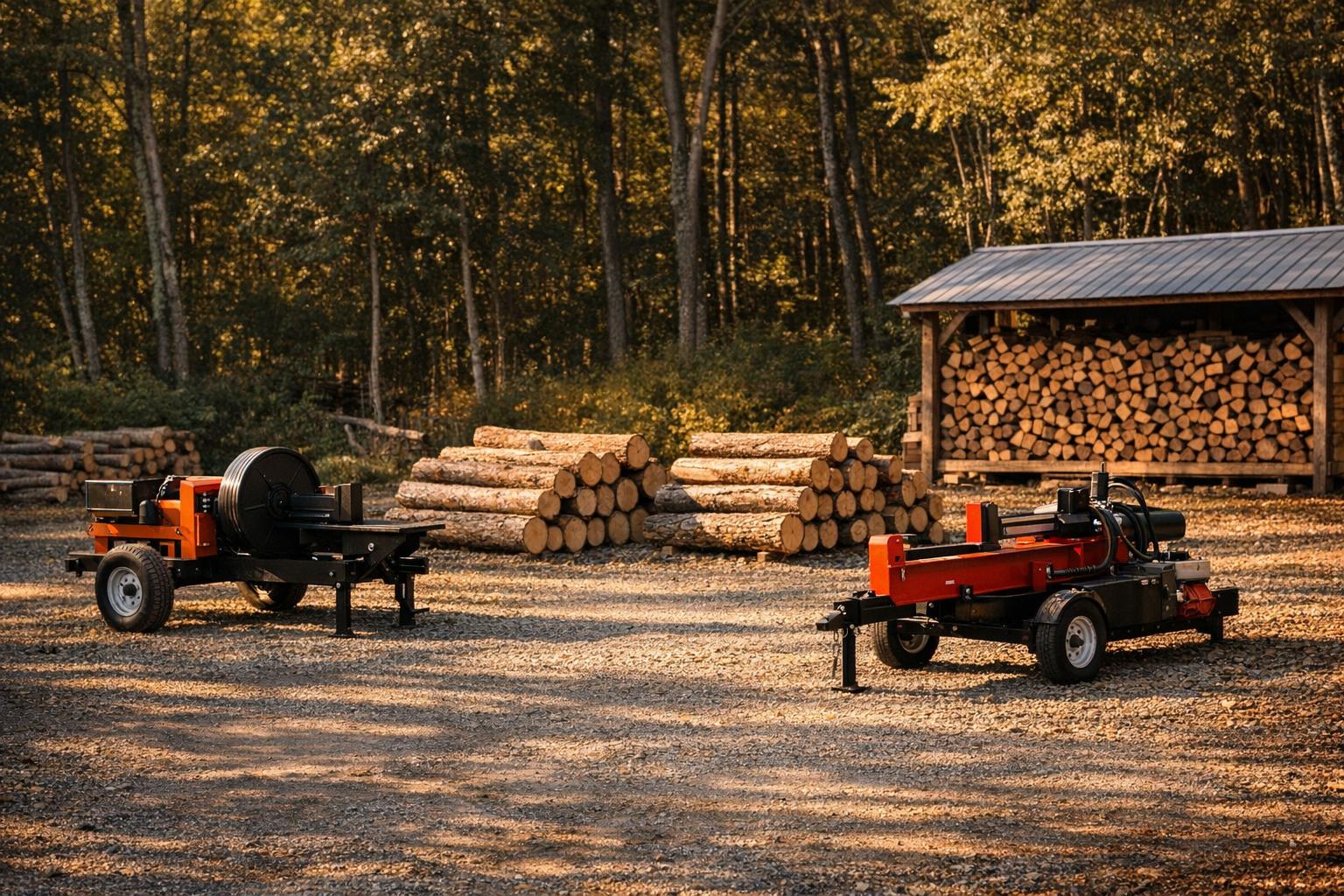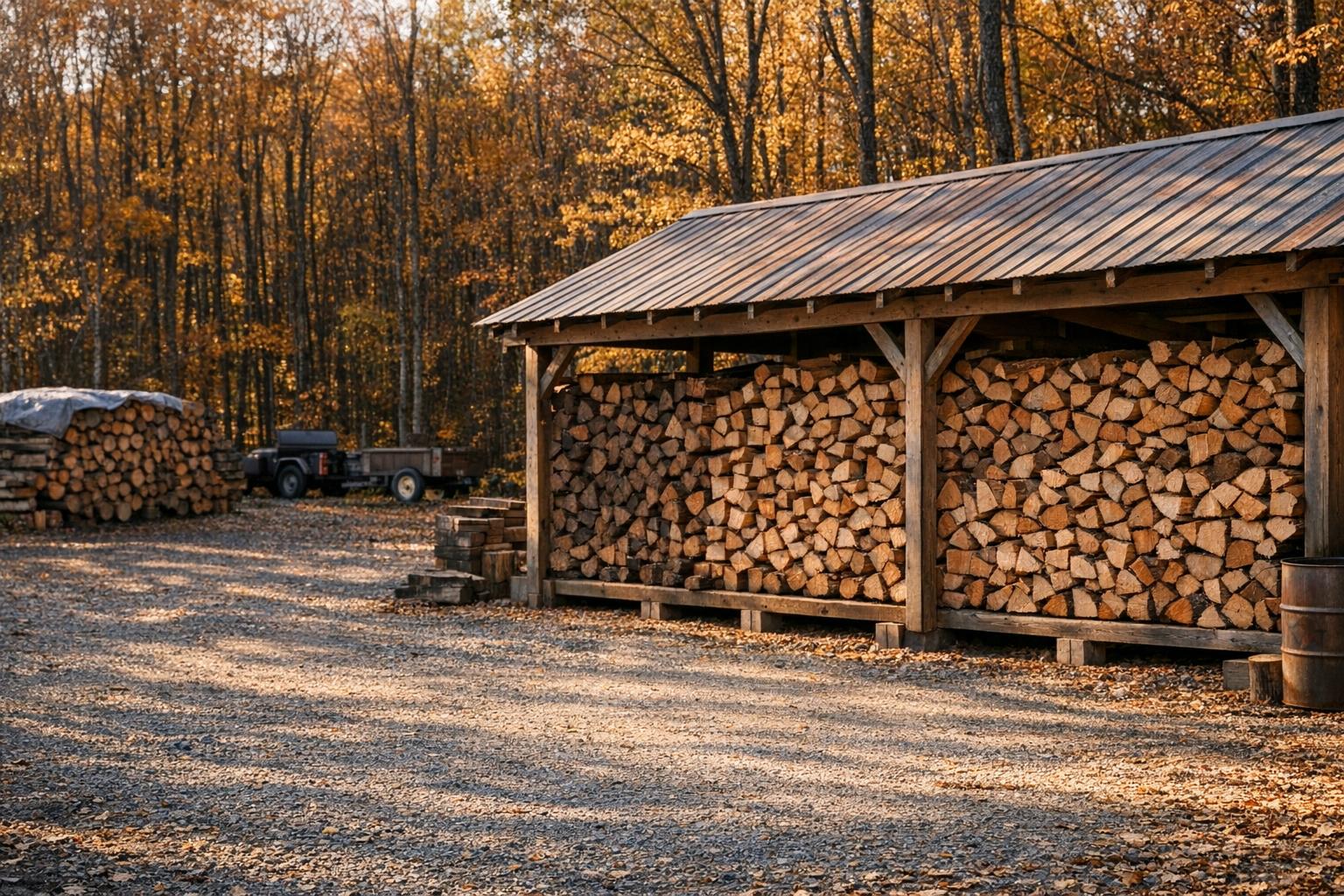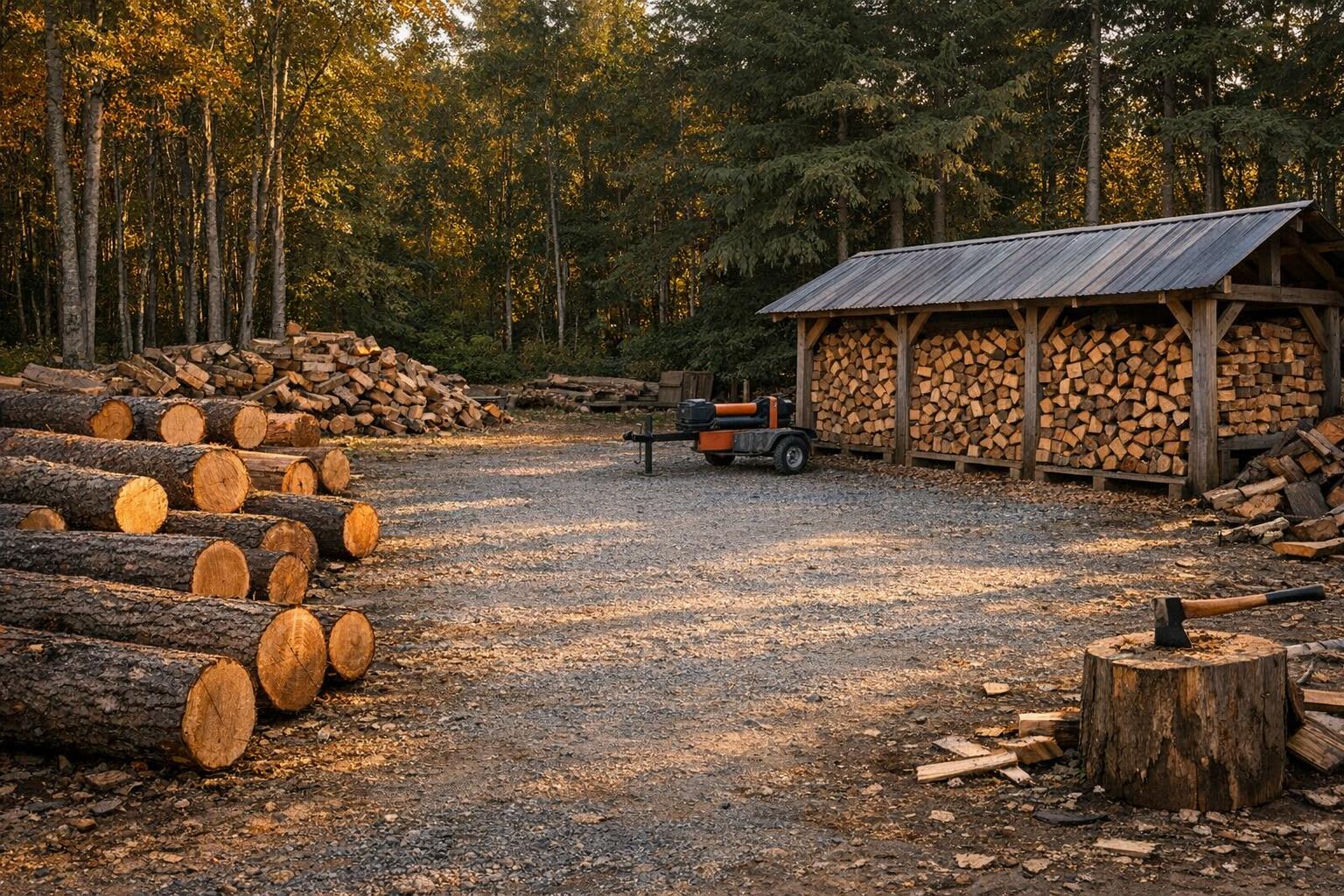
Use this guide to organize a model-specific buying decision. Our research uses published equipment information, not physical testing.
Splitting and seasoning are different stages
A splitter changes the size and shape of wood, but it does not certify that the resulting pieces are ready to burn. Seasoning is a separate process influenced by the wood and its storage conditions. A fresh split surface can look dry without establishing the condition of the whole piece. Keep the machine purchase and the fuel-storage plan connected without confusing their purposes. The EPA's best wood-burning practices page is a useful starting point for responsible wood use and links to its Wet Wood is a Waste material. That source concerns fuel and burning practices, not an endorsement of any splitter in our catalog. We do not use an EPA reference to imply that a machine has been tested, approved or certified. The Landworks listing also cited below supports equipment identity only. Different sources answer different questions, and keeping their scope clear is part of making a useful firewood plan.
For the next decision, read our Choosing a Log Splitter: Start With Your Wood.

Design a storage workflow before filling the space
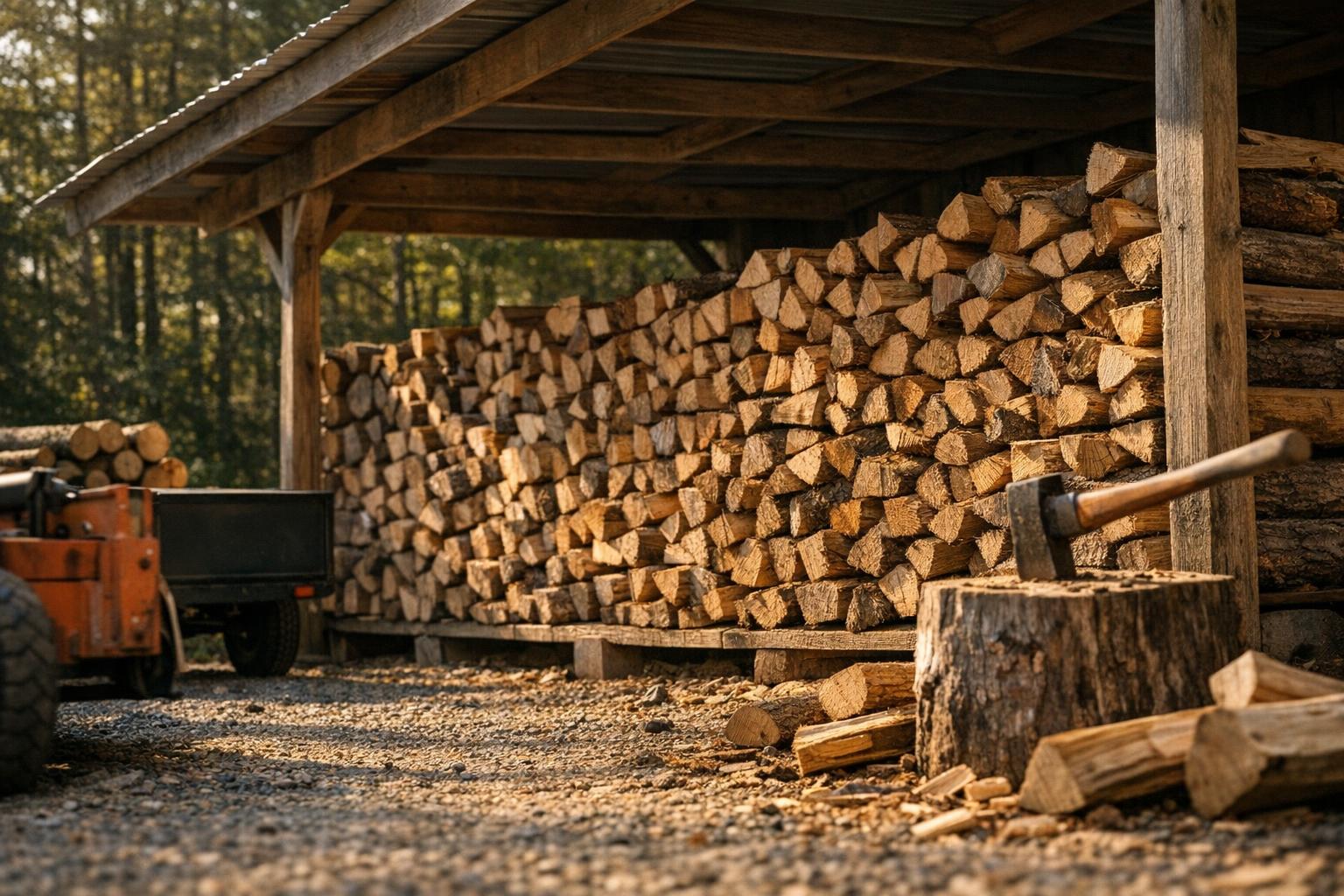
Think about where newly split wood will go before beginning a large session. An orderly storage arrangement makes it easier to distinguish batches and avoids turning the work area into a growing obstacle course. Consider access, room for the intended quantity and the route by which wood will later reach the appliance. Check applicable local requirements and the appliance manufacturer's guidance for storage near buildings or equipment. This article does not prescribe a universal clearance because those conditions vary. A rack's advertised capacity should also be read carefully: dimensions, assembly and loading instructions belong to the exact product. Do not assume that a storage accessory pictured beside a splitter is included with it. If you choose a separate rack or shelter, evaluate that item on its own documentation rather than on the splitting machine's rating. The goal is a manageable process from unsplit rounds to organized stored fuel, not simply the largest pile you can create in one afternoon.
For the next decision, read our Kinetic vs Hydraulic Log Splitters: What Changes.
Use observations and appropriate checks, not a calendar promise
There is no single seasoning date that this website can assign to every batch of wood. Species, piece size, starting condition, weather and storage all affect the outcome. A calendar entry is helpful for record keeping, but it is not a moisture measurement or proof that fuel is suitable for your appliance. Use the appliance instructions and reputable wood-burning guidance to decide what checks are needed. If you use a moisture meter, follow its instructions and understand what the reading represents rather than treating any displayed number as self-explanatory. Keep batches identifiable so that newly added wood does not become indistinguishable from older stock. This is a planning recommendation, not a claim that a particular storage arrangement will produce a guaranteed drying time. Be cautious with retail claims that collapse the process into a fixed number of weeks. Ask what conditions the claim assumes and whether they resemble your actual site before relying on it.
For the next decision, read our Log Splitter Safety: Use the Exact Model Manual.
Keep fuel suitability separate from machine capability
A machine capable of splitting a piece of wood does not establish that the wood should be burned. The EPA page distinguishes good burning practices from materials that should not be used as fuel, and your appliance manual may impose additional requirements. Do not use the splitter catalog as a list of acceptable fuel types. Likewise, a faster splitting mechanism does not shorten every subsequent stage of preparing and storing fuel. When comparing machines, estimate the full handling workflow: moving rounds, positioning them, clearing the work zone and stacking the output. Leave room in that plan for the storage checks and record keeping that happen after the motor stops. If the intended storage space is already full or unsuitable, producing more split wood may not solve the actual problem. A balanced purchase decision connects equipment capacity to a realistic storage and use plan. That is more informative than treating the tonnage badge as a measure of how quickly a household becomes ready for the heating season.
Read the exact source before ordering
The source links below refer to specific equipment or guidance, not to hands-on testing by this site. Match the model and current configuration before using a listed fact. Review counts and averages are captured observations for an exact Amazon identifier; they can change and may reflect a variation family on the merchant page. Prices and stock are displayed only while the collected offer remains within its freshness window. Neither a customer average nor our editorial rating establishes suitability for your own work area. Keep unanswered compatibility, supply, service and delivery questions open until the manufacturer or seller provides a clear, written, model-specific answer. Record the source and its date so that later listing changes do not silently replace the configuration you actually researched.